Searching for the Remote, Ep. 151

When Karen and I adventure travel, we try hard to find the unusual and the less-trodden. I think a lot of travelers have this same goal. Most of us live in urban environments (55% by current measure) and it’s only getting more common. So, our travel ends up filling a need to escape the crowds and congestion and remind us that peace and beauty can still co-exist on our planet. With a sailboat as our magic carpet, Karen and I are able to get into some pretty small and rustic spots. But inevitably, there will be others there, maybe even a tour group, and it makes you look to the horizon again for something more remote. I don’t mean to imply that fellow tourists, and the tour groups they often leverage to find adventure, are inherently bad or somehow unworthy. It’s great that people are getting out there and discovering the world. It’s just that when you work hard to find an out-of-the-way cove or beach or mountain peak, and discover there’s nothing new to the discovery, it leaves you with goals unmet. And when you hitch up the wagon to find even more remoteness, and there too, other pioneers are traipsing around the site, you start to long for the folkloric Huck Finn days.

Now, I know you may think there’s nothing particularly remote about the Mediterranean – we’d have to go to the North Pole or the pole on the summit of Everest – but I would argue that even Everest climbers grapple with this same conundrum. I’ve heard base camp is pretty overrun these days. For our part, we were sailing away from the Greek mainland and heading for two tiny dots on the Ionian Sea – Paxos and Antipaxos. There are no airports, no cruise ship terminals, nor large passenger ferries. It’s only accessible by small boat. If you want to be in the company of crowds, you’d visit nearby Corfu. So across the sea we sailed, pointing the bow first towards Paxos.
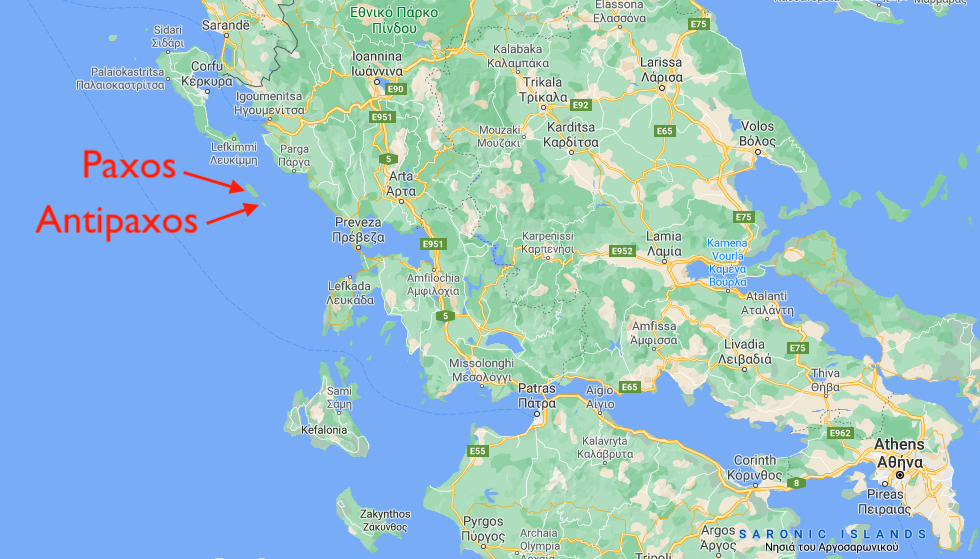
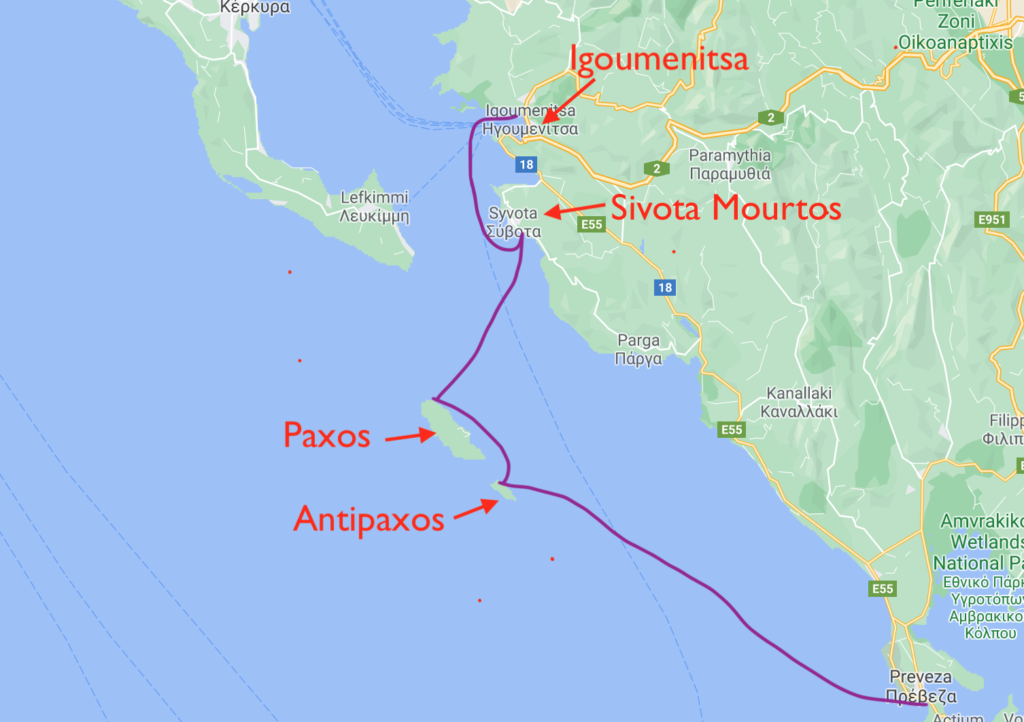
We arrived at the northern harbor of Lakka, which has to be one of the most ideal island anchorages with its perfect blend of beauty and protection. Inside the nearly circular harbor are plenty of places to anchor and back down with stern lines ashore to rocks or metal pins. Usually, these med moor harbors are deep in the middle, causing captains to put out a lot of chain and increasing the risk and chaos of crossed anchors. But here, with 2-3 meters of depth, it was ideal, with the water clear enough to often see your anchor from up on deck. We had been here last summer, but with Covid I had assumed we would be experiencing this island on quieter terms. Yet, the harbor was filling up quickly, and a long line of boats could be seen from the entrance, sailing down from Corfu. Oh well, we’d be in the company of many other boaters this time, but maybe our next stop might reveal some element of remoteness. In the meantime, the harbor view did not disappoint.
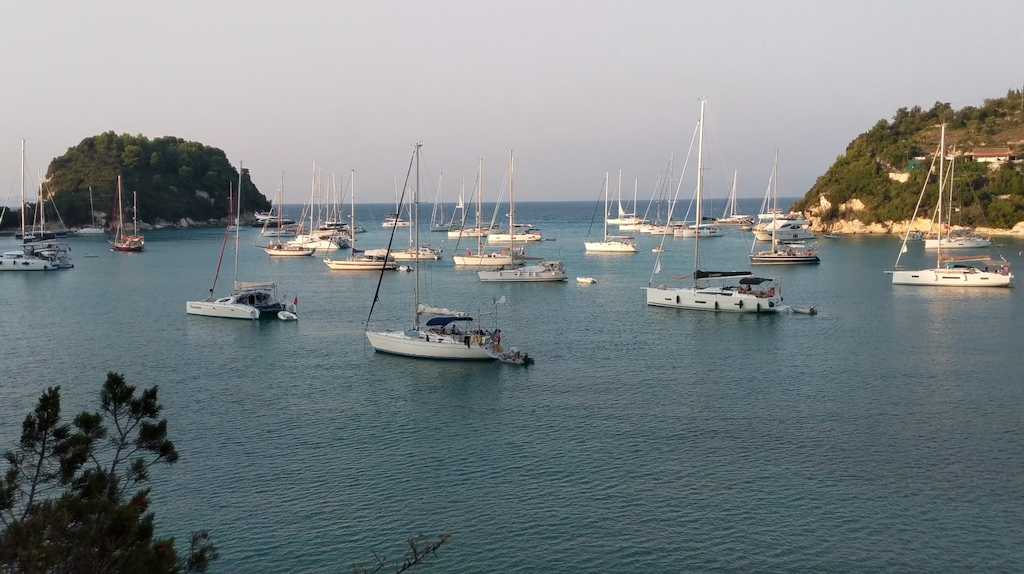
The harbor at Lakka, Paxos
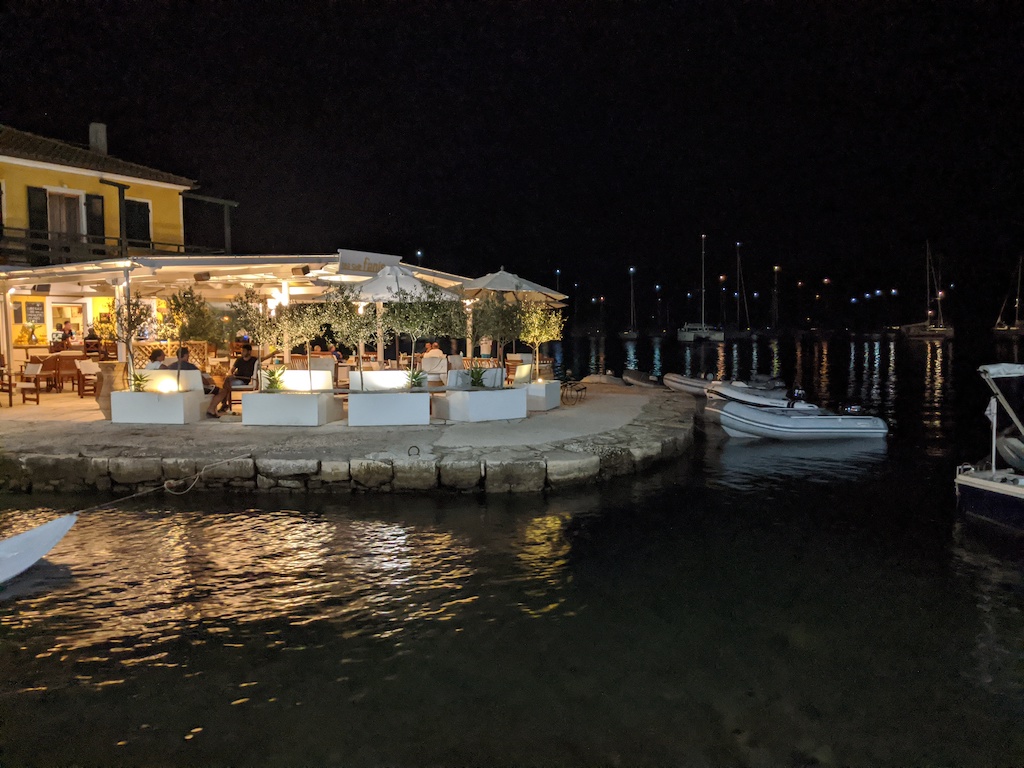
And Lakka at night

If Covid wasn’t going to restrict the number of boaters, we wanted to make sure we didn’t get skunked on a spot ashore for dinner. When Karen and I had visited Greece many moons ago for our honeymoon, I had reveled in the common practice of taverna owners encouraging you to walk right through their kitchen to see the night’s selections. Progress had been good for Greece, but I had missed this quaint little treat. Alas, our hostess at Alessandro’s, after talking care of our thirst, pleaded with us to come inside to see what was cooking. She had no hesitation, in her nice attire, to walk behind the counter and start pulling up lids and describing the huge array of options. I was blown away. All joking aside, I wanted to dive in and try them all! Lamb kleftiko is a specialty in this area, and it stood up to its reputation. Technically translated as ‘lamb stolen’, it is a slow cooked affair, with potatoes, onions, red peppers and tomatoes, and of course a good helping of olive oil, garlic, and wine, all simmered together. It’s almost a religious experience!
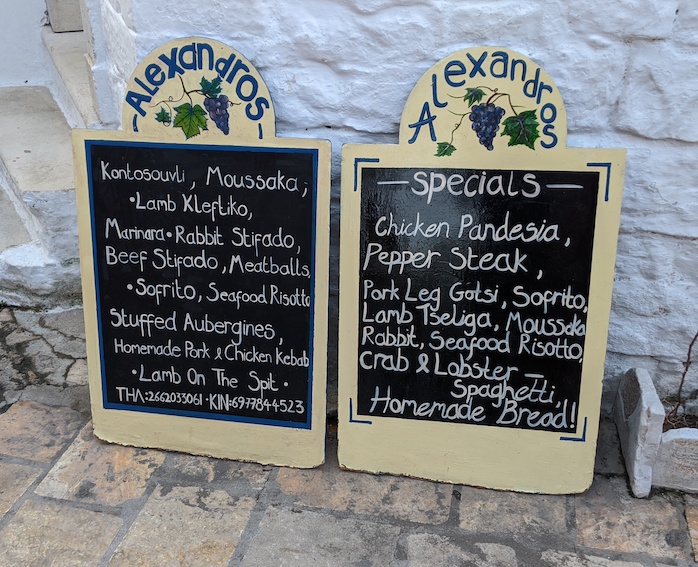
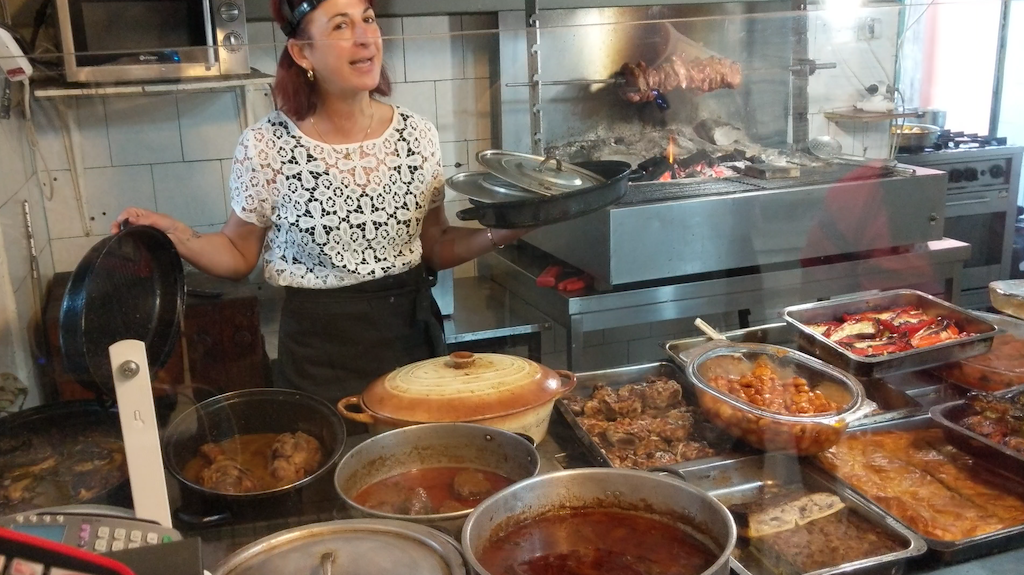
You can’t go wrong with this lineup! Alexandros, Lakka
A journey through the kitchen at Alexandros, Lakka

They say the way to a man’s heart is through his stomach, but I’d suggest this is sexist and outdated. I think all of our hearts were enriched from the evening’s experience, and with renewed vigor, we set out in the morning for the western side of Paxos, with its impressive cliffs and caves. Again, this should not be confused with Everest, but there are no safe harbors on this weather-exposed side of Paxos, and when you swim deep into the limestone caves carved out by centuries of storms, you can feel very small and trivial, and yes, a bit remote. We anchored Sea Rose off the first tall set of cliffs, with the term anchoring used loosely here. There is no sand or mud to grab the anchor’s flukes. You basically drop the anchor and a good helping of chain, and the whole thing nuzzles down in between big boulders, with the weight holding you in position as long as the wind and waves are not too strong. When it’s time to leave, you hope and pray that the many pointy parts of the anchor, designed to catch on the sea floor and hold you in a storm, don’t do exactly that and get wedged in between two boulders. It’s too deep here to dive and recover gear. We’d have to leave our cherished Bulwagga and chain behind and start all over sourcing a new anchor system. I breathed a sigh of relief as the anchor came into view.
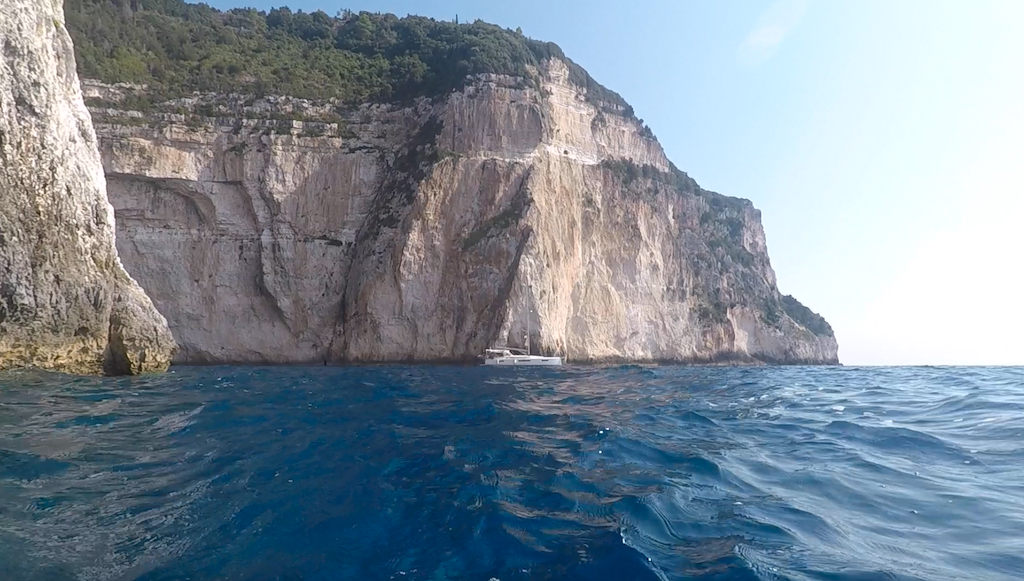
Tall cliffs dwarf Sea Rose, west side of Paxos
That tiny white speck is Theo paddleboarding, west side of Paxos
Karen cave snorkeling, west side of Paxos

The west coast is a nearly continuous undulating course of cliffs and caves. We headed south to see and sample the next gift of rugged beauty. It came shortly after, as we rounded a tall point and aimed for what the chart simply called ‘Blue Cave’, an understatement for three large interconnecting caves with ceilings taller than a typical sailboat mast. And there were plenty of masts to take measurements from, as we nosed our way in to find depths shallow enough to anchor. Rugged beauty, check. Remoteness, not so much!
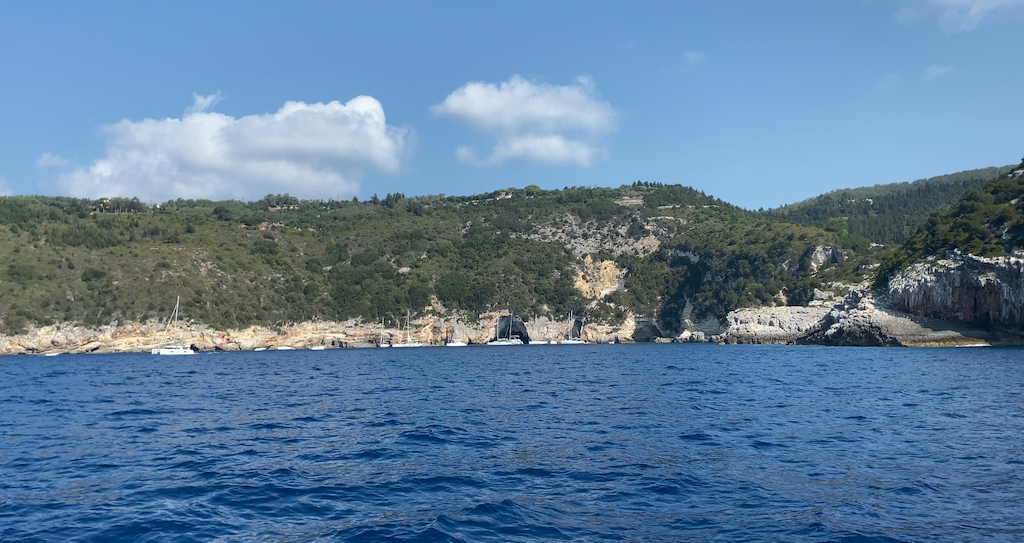
Blue Cave, in the company of others, west side of Paxos

Still, there was good reason for the crowds. As you swam into the first cave, a shaft of sunlight encouraged you to swim through to the adjoining cave with tall sides opening to the sky. From there, a narrow hole in the rock guided you to a third cave with a deep overhang protecting a narrow sandy beach. This was quite the playground, whether you were swimming, paddleboarding, or just floating without a care in the world.
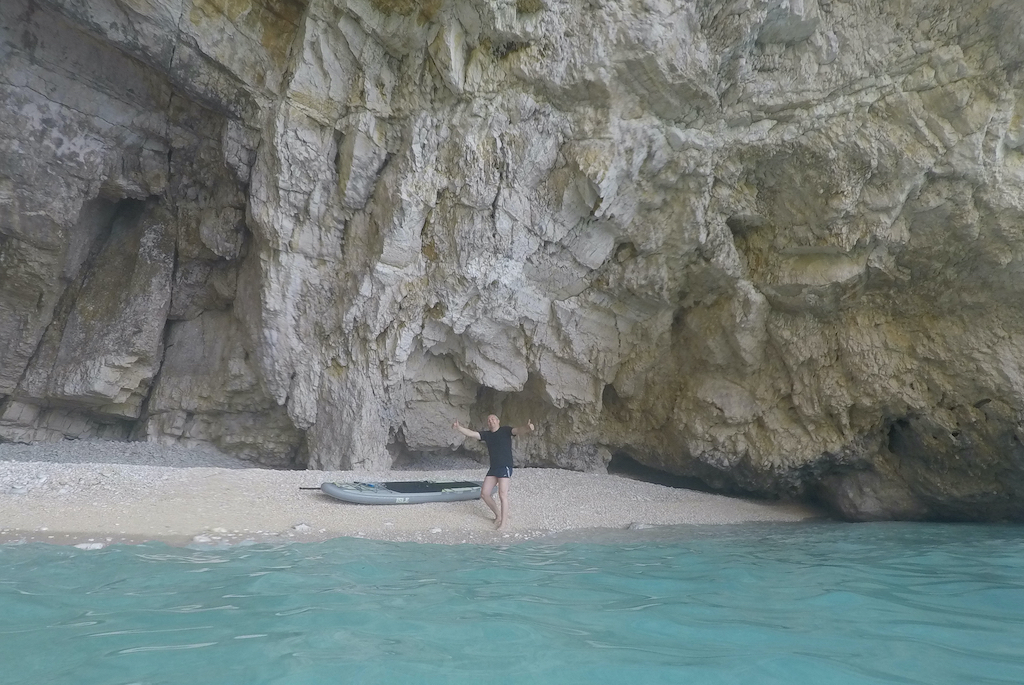
Exploring the Blue Cave, west side of Paxos

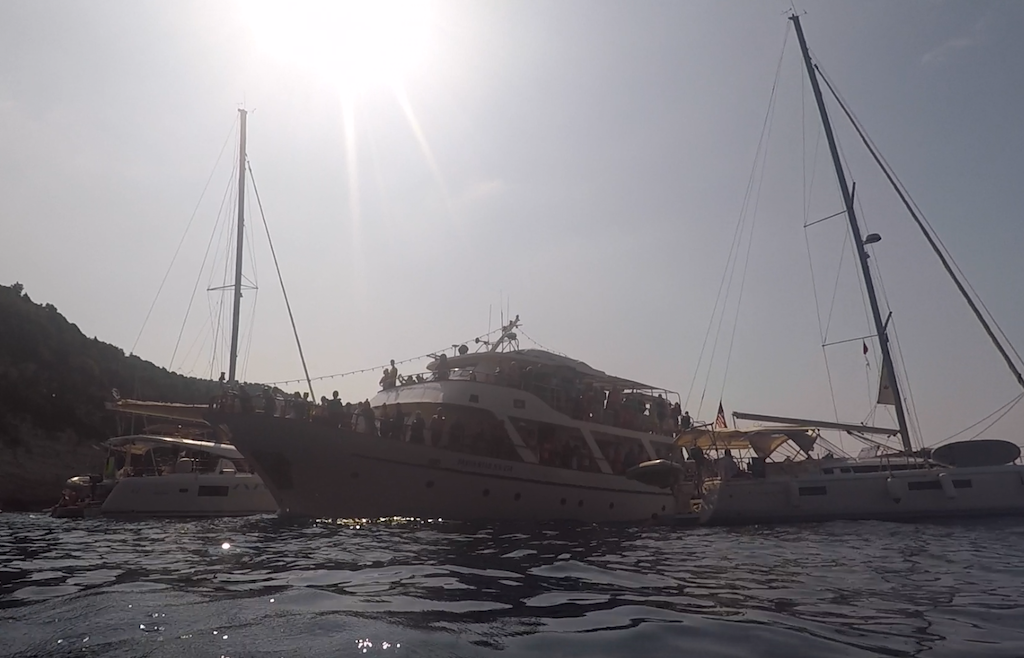
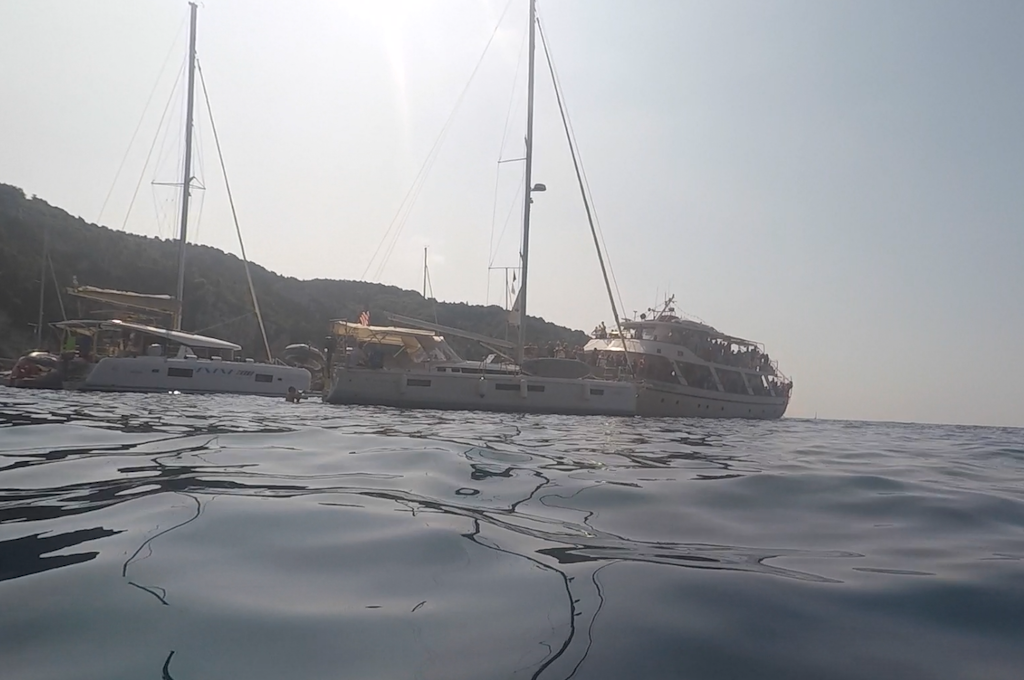
But the carefree life didn’t last for long. In the distance, we could hear a large boat blowing its horn as it rounded the point about a mile away and headed our direction. I thought this was odd. Was there an emergency? They were pushing a big bow wave of white water as they quickly closed the gap to the Blue Cave. I could hear the captain on the intercom saying something unintelligible. As he got closer, it became painfully obvious his intention to run Sea Rose down, as he followed a straight line to the caves, other boaters be damned. You don’t need have a captain’s license to know that an anchored boat (assuming it’s anchored in an anchorage like we were and not in a shipping channel) has the right of way over a boat underway. Yet this captain was aiming for our bow, and telling everyone in the area to move out of his way! I was shocked! Karen and I were a hundred feet from Sea Rose, and I watched in horror as the overhang of their boat towered over our foredeck. He was really going to run us down – this was nuts! The tour boat was overloaded with passengers, and the captain didn’t give a damn about the rights of other boats in the area. He just wanted to bully his way through. I started yelling at the captain to stop, and when this didn’t work I resorted to more colorful language. An embarrassing amount of it. I didn’t know I harbored such anger! But when you’ve invested so much blood, sweat and tears into your home, there’s no telling how far you will go to protect it. Thankfully, Theo was closer and climbed onboard, started the engine and motored a boat length forward, as the captain pushed past and drove right into the cave, despite swimmers everywhere. My anger turned to disgust and then to revenge. As the tour boat motored past us on the way out, I convinced Theo to join me at the bow for a traditional American act of rebellian. We dropped our drawers and gave them the moon!
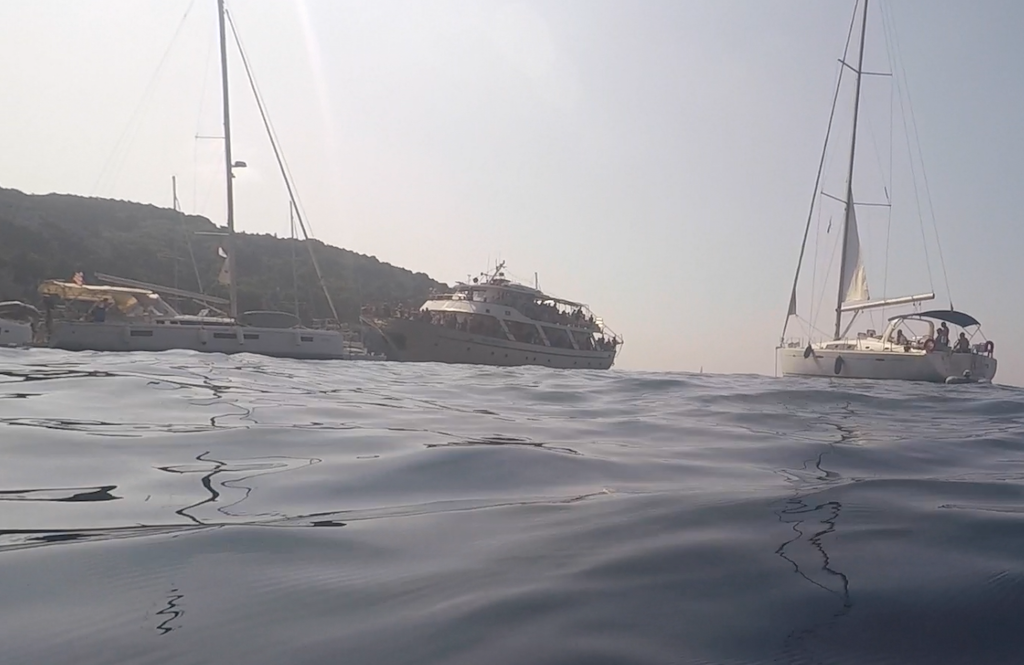
Close…
Closer…
Way too close! Thanks Theo for the quick action to save Sea Rose!

We pushed further south to find a perfectly quiet and drama free spot for lunch and a swim, with the added bonus of a natural arch to decorate the shore.
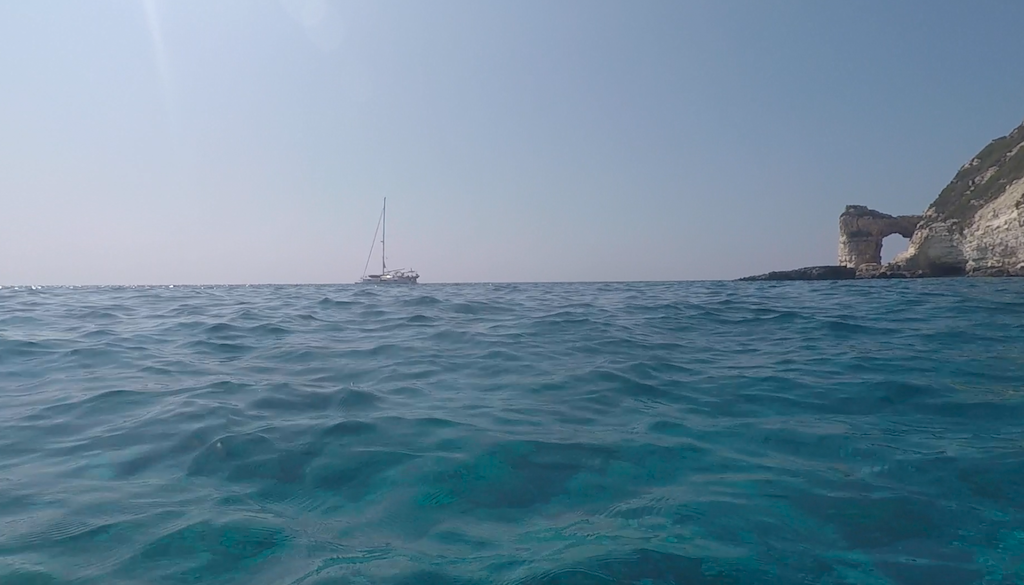
Triptos, on the southern end of Paxos

Despite the careless acts of others, it had been a great day together and fun to have Theo join us on Sea Rose so that we only had to worry about one boat. Upon our return to Lakka for the evening, even more boats joined us – by Pedro’s count 65 in total! The roar of a pair of fighter jets overhead seemed to confirm my foolishness for seeking remote discovery. I would have to learn to embrace my spot as one small cog in the greater gear of humanity.

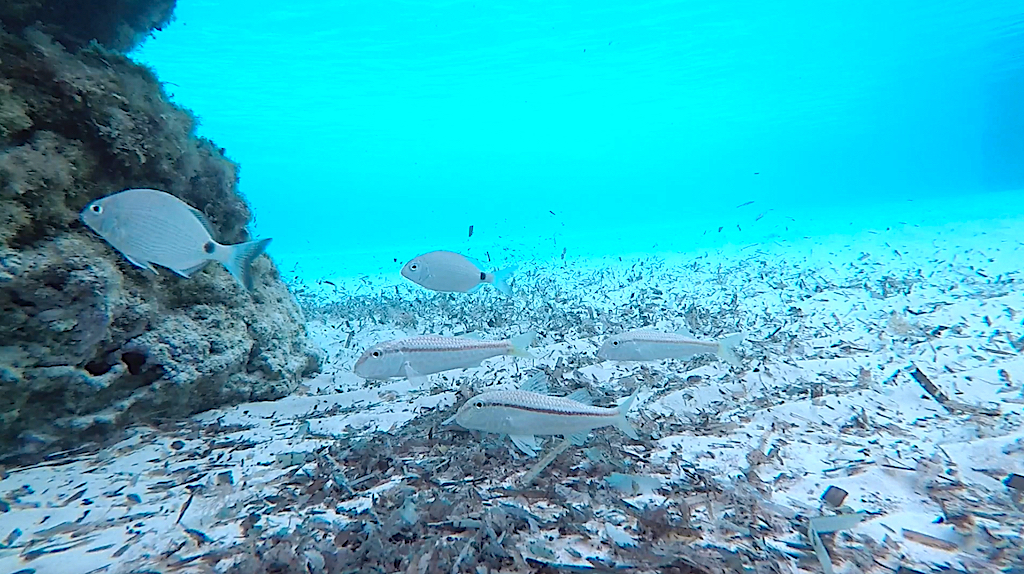
Knocking us back into reality, another storm was brewing to the west of us, promising to bring high winds and rain for the next two days. We needed to find safe refuge quickly, before the favorable spots filled up. We had read promising stories about Antipaxos, the next of kin to larger Paxos to the north. We made haste under power and calm seas to a little harbor named Voutoumi, on the protected eastern shore. The only alarming part were comments online about how the tour boat captains here would demand everyone leave the anchorage so they could use it – oh no, not again! We took a chance that the approaching bad weather would keep the aggressive captains in port. It turned out to be a lovely spot. The one taverna ashore was closed for dinner due to lack of boat traffic, but they did sell me a bottle of wine to restock the Sea Rose cellar as we awaited the storm. Swimming through the shallows of the cove, salamandering through the rocks like the family of fish around me, I hoped they would allow me to interrupt their day for just a moment, so I could renew my vows with Mother Nature.
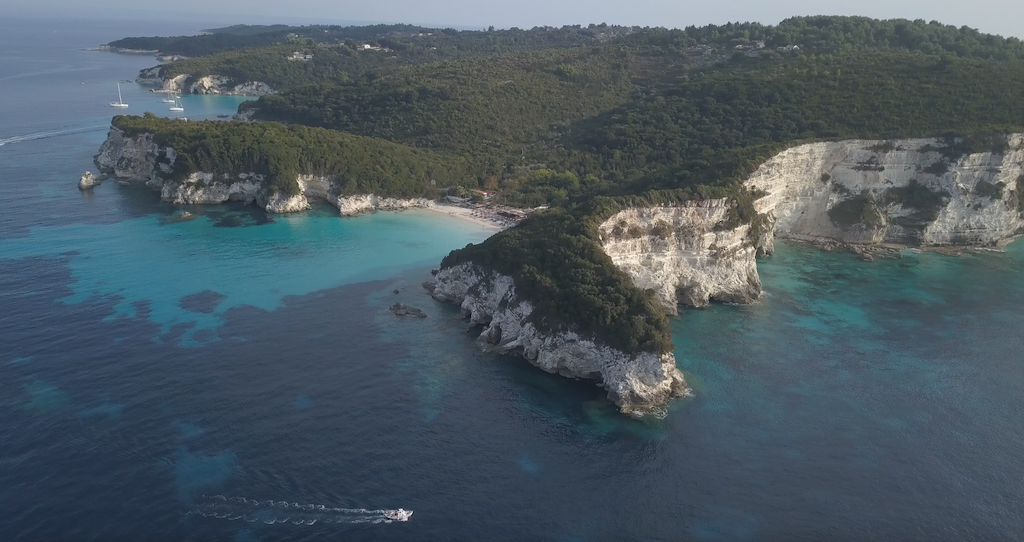
Voutoumi anchorage in the distance, Antipaxos
In the shallows of Voutoumi, Antipaxos

The Adventures of Jar Jar Binks, Ep. 150

Earlier in my working career, I was very cautious about making friends outside of the office. For one thing, life in Corporate America can be highly transient; you never know whether it’s going to be worth the investment. Then, you start working with someone, and you realize your connection transcends the workplace. It could have easily been a cafe, a flight departure gate, or a campground in the mountains. It just so happens that you each found the same employer. I was fortunate to have a few of these special people in my life, and one of them was my friend Pedro. We worked together at Autodesk, and while work conversation was required at times, we had a lot more fun talking about life outside the office. It helped that he was a lifelong fan of Bruce Springsteen!

Continue reading “The Adventures of Jar Jar Binks, Ep. 150”

Nature’s Classroom, Ep. 145

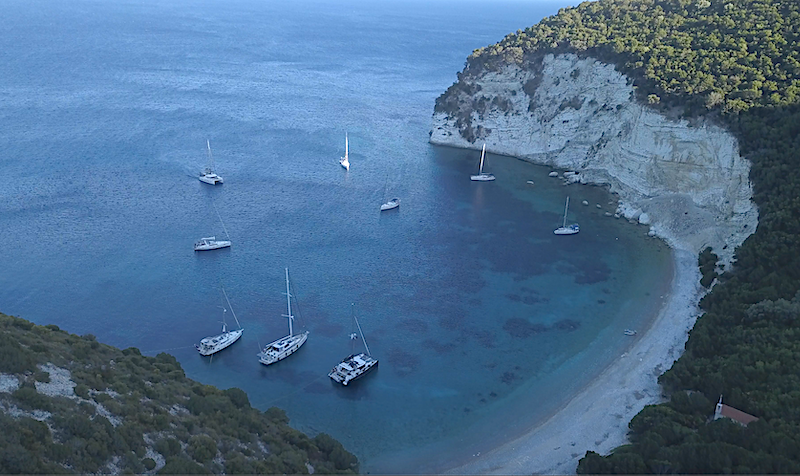
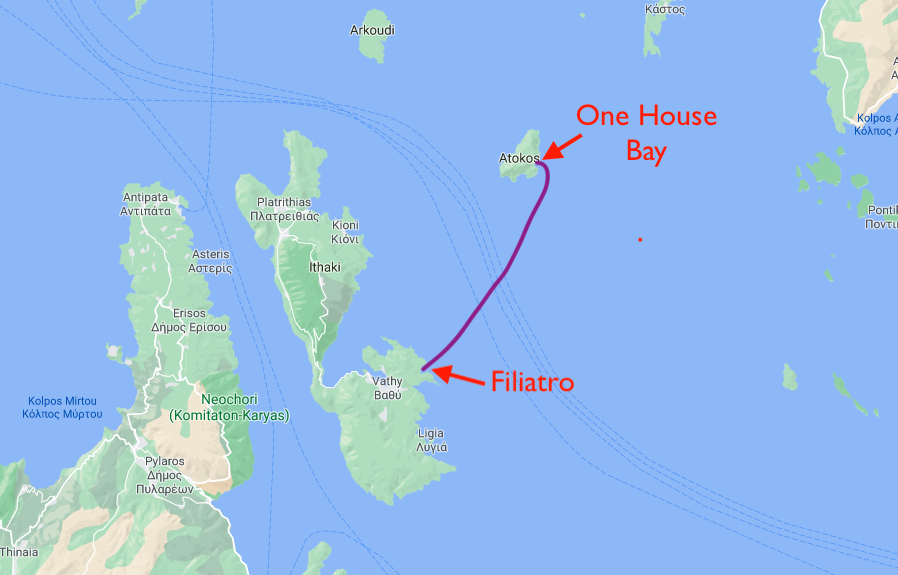
I’m pretty sure the seasickness I was feeling in the morning had nothing to do with the late night with new friends. There was a change in the wind and a swell was rolling into the anchorage. I assure you this was the only reason! We had dropped our lines and were underway by 7am for the island of Atokos, 7nm distant but looking so close it seemed like you could reach out and grab it, the air was so clear. Just enough wind was blowing to make killing the engine a simple decision; we sailed gently onward, at a time in the morning when we would normally just be rustling out of our bunk.

Continue reading “Nature’s Classroom, Ep. 145”

Staking Claim and Claiming Names, Ep. 140

As the island of Zakynthos came into view, we officially entered the Ionian island group of western Greece. Last year, we had toyed with the idea of visiting Zakynthos, as we made our way south from Croatia, but time was not on our side as we pushed to make a date with friends in the Aegean. This season, with neither Karen nor I willing to take the Covid risk of leaving Greece and tempting clearance into another country, we were staying local. We had six more weeks in Greek waters, which gave us carte blanche to see every nook and cranny in the Ionian.

There are a handful of iconic images that Greeks use to tempt tourists to their land. There is, of course, the Parthenon, and the windmills on Mykonos, as well as the cliffs at Santorini, and finally there’s Shipwreck Beach, which coincidentally resides on Zakynthos. If you’re an Instagram nut, Shipwreck Beach is likely on your short list, to pose with heart-shaped hands, a pouty face, or a simple thumbs up.

Continue reading “Staking Claim and Claiming Names, Ep. 140”

A Final Peak at the Peloponnese, Ep. 139

A couple of years ago, when Samuel Adams started hawking their ‘West Coast Style’ Rebel IPA, I was intrigued. Here I was a California-born living in Samuel Adams country on the East Coast. What could be a better beer to drink? If only one could solve the riddle of what ‘west coast style’ really meant. Beer aficionados touted its hoppier hops, but to a mere commoner like me, it was just a simple IPA. As we pointed Sea Rose up along the west coast of the Peloponnese peninsula, I wasn’t going to let a catchy marketing cliche get in the way of appreciating this region’s unique west coast style. If it meant a little beer tasting along the way, all the better!

Continue reading “A Final Peak at the Peloponnese, Ep. 139”

The Eyes of Venice, Ep. 138

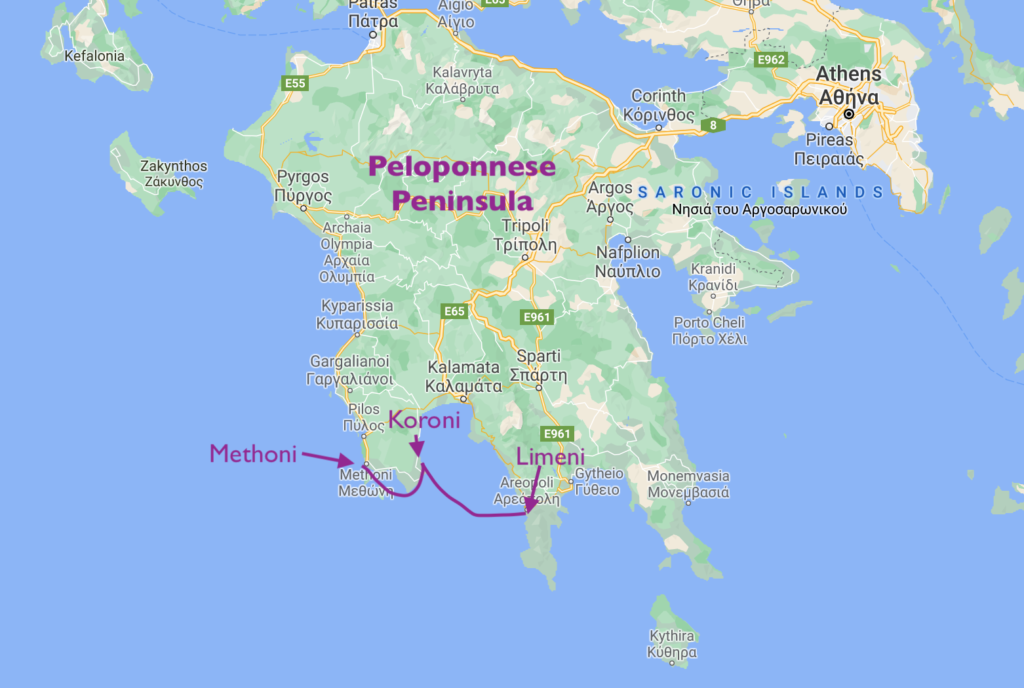
It might help if you scrounge around ahead of time for the ouzo in the back of your liquor cabinet, but when I look at the layout of the Peloponnese coastline and bays, it reminds me of the profile of an American Bison, grazing on the plains of Yellowstone National Park. And with that spirit of the Wild West, we set off westbound from Limeni to cross the last 20 miles of open water to the port of Koroni.

Continue reading “The Eyes of Venice, Ep. 138”

A Transformative State of Mind, Ep. 137

The Peloponnese landmass branches out into three prominent peninsulas on its southern shore, forming two long, deep bays. These peninsulas are barren, dry landscapes, with steep ridge lines running their length, reminding me of the spiny, crusty back of a Tyrannosaurus rex. And perhaps it is the threat of a T-rex emerging from the dead that keeps the general populous away from this region of Greece. Or the lack of roads. What remains is a number of small villages and, in the summer, a preponderance of mini-campers driven by modern day hippies trying to find a momentary escape from contemporary living. Perhaps there were a couple people onboard Sea Rose looking for a bit of the same.

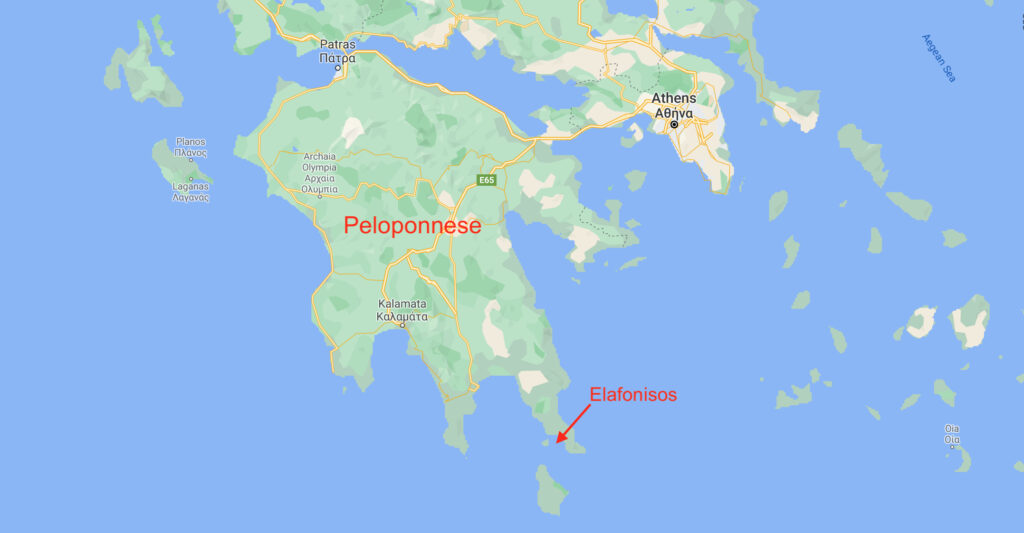
We launched our exploration of these deep bays and peninsulas after an early morning departure from Elafonisos. I was hoping that the concentration of large motor yachts around the corner were not going to hinder our escape from a contemporary state of mind. Thankfully, the four hour trip across calm flat seas to the Mani peninsula and the port of Kayio was blissful – dare I say transformative. After so many days of high winds and nasty seas, it was magical to rediscover sailing in benign weather. 

Continue reading “A Transformative State of Mind, Ep. 137”

Windward and Airborne, Ep. 136

Sitting at anchor in Gramvousa, on the island of Crete, with the prevailing northerly winds howling down on us, and a long upwind climb in our near future to get up to the Peloponnese, it felt a little like being stuck in a sink hole. Cruising down to Crete had only exacerbated our upwind challenges. But it was worth it. We had hiked the gorges of Crete’s interior, ambled through narrow stone-lined alleys of historic villages, sipped the nectar of its burgeoning wine industry, and swam through the rusting hulks of not-so-long-ago shipwrecks. Now we had to pay our dues.

Continue reading “Windward and Airborne, Ep. 136”

The Grand Gramvousa Island in Northwest Crete, Ep. 135

As is typical for much of Greece, morning winds are lighter than afternoon. If you need to go up-wind, it is best to leave early. At 7 am on the morning we would make our way to the northwest tip of Crete, we were tossing off our stern lines, raising our anchor and heading out of the charming harbor of Chania. The winds had been erratic and strong for the previous couple days, so we expected it to be a rough trip.

Zoomed in map of the northwest coastline of Crete – Notice the two long peninsulas stretching northward with Gramvousa near the tip of the outer peninsula!
Gramvousa Island on the top with the lagoon near the bottom make this a popular though remote tourist spot.
Continue reading “The Grand Gramvousa Island in Northwest Crete, Ep. 135”

Searching for the Soul of Crete, Ep. 133

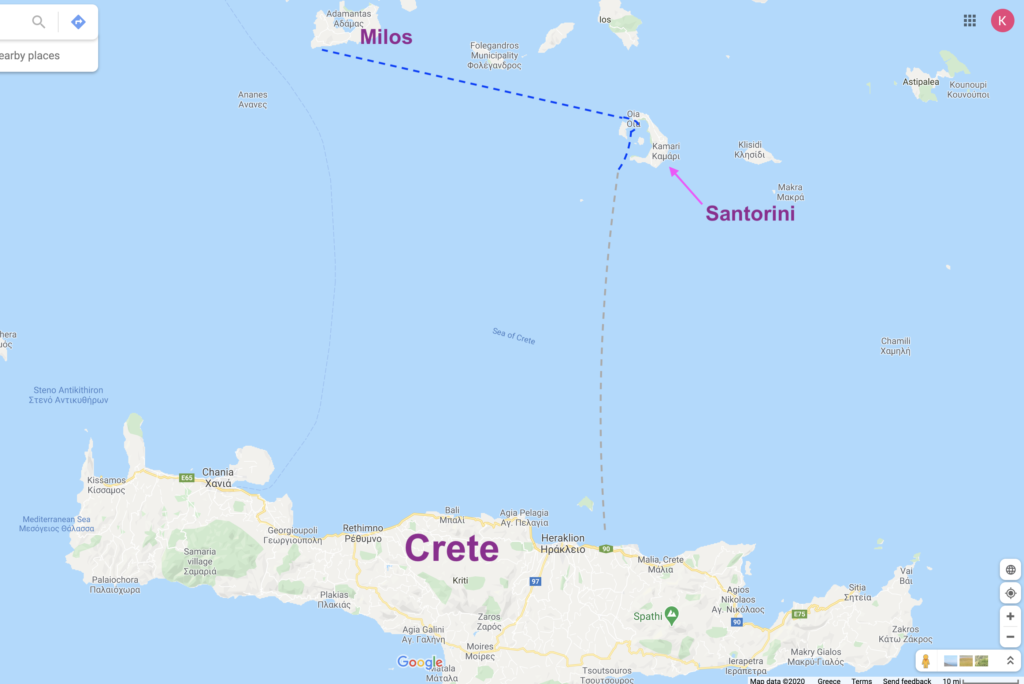
We were interviewed recently by Jeanneau America for an expose on what owners do and see with their boats. As we sat on the shores of Newport, Rhode Island, explaining our exploits in the U.S. onboard Thalia, and now onboard Sea Rose in the Mediterranean, our host Paul remarked on how we must be big planners to accomplish these sailing goals. And in general Karen and I are pretty serious task masters, fortified by our many years in corporate America working to get project teams focused in a common direction. But as we awoke at dawn inside the caldera of Santorini, and pointed the bow of Sea Rose south, we were living like carefree teenagers. Crete, about 65 miles distant, was big, downwind, and a place we knew nothing about. So we decided to sail there. Simple as that!

The nearly direct south route to Crete

Many destinations had been out of scope for our westbound march out of Greece, in the pre-Covid19 planning talks we had over the winter. But this was a new game. We weren’t going to make it to the English Channel by the end of this summer as originally intended, and Greece was taking good care of us, so we dialed back our hit list, with a determination to see more of the Greece we loved. 

Crete is a part of Greece, but like other large islands owned by mainland parents such as Corsica and Sardinia, the Cretans have a loyalty to their island first, and to the greater Greece nation second. It’s not like they harbor any animosity towards Athens. Their island has been fought over and occupied by far too many foreign powers, even by European standards. There were the Byzantines, the Romans, the Venetians, the Arabs, the Ottoman Turks, the Germans during WWII, to name just a few. Yet, the Cretans were some of the first to send personnel to fight for the Greek War of Independence starting in 1821. Ironically, major civilization on the island started with the Minoans, who were renowned for their peace-loving nature. We were to tour the remains of the Minoan palace of Knossos in a few days and revel in the fact that very little in the way of defensive equipment – forts, castles, spears, cannons – were found during the archaeological digs. I couldn’t wait to discover this island and understand further it’s contrasts and contradictions. 

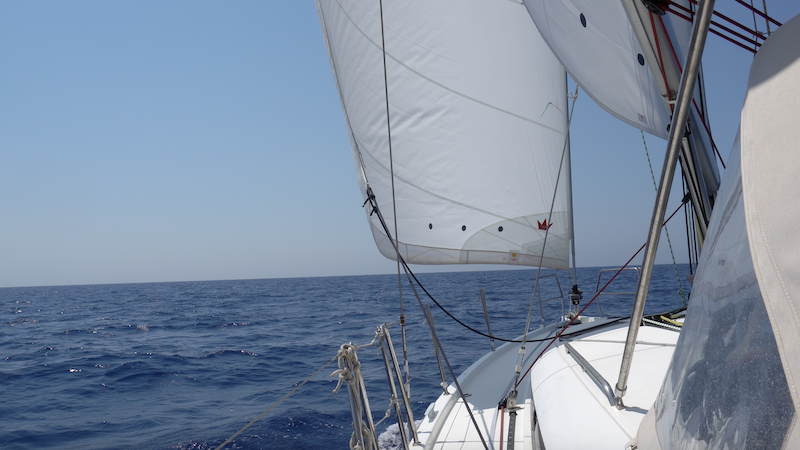
We unfurled the jib and tried motorsailing, as the dramatic silhouette of Santorini faded to our rear. Before long the forecasted northwesterlies kicked in and allowed us to replace the engine with full main, jib and a splendid 6 knots of beam-reaching speed. Indeed, we put the boat on autopilot and had to do very little in the way of sail trimming, as the steady 10-15 knots of NW wind blew blissfully all day, until we were within 5 miles of the Cretan coastline. Not since we had entered the Aegean had we been given a gift of such pure and easy sailing. 

Blissful, consistent sailing south to Crete

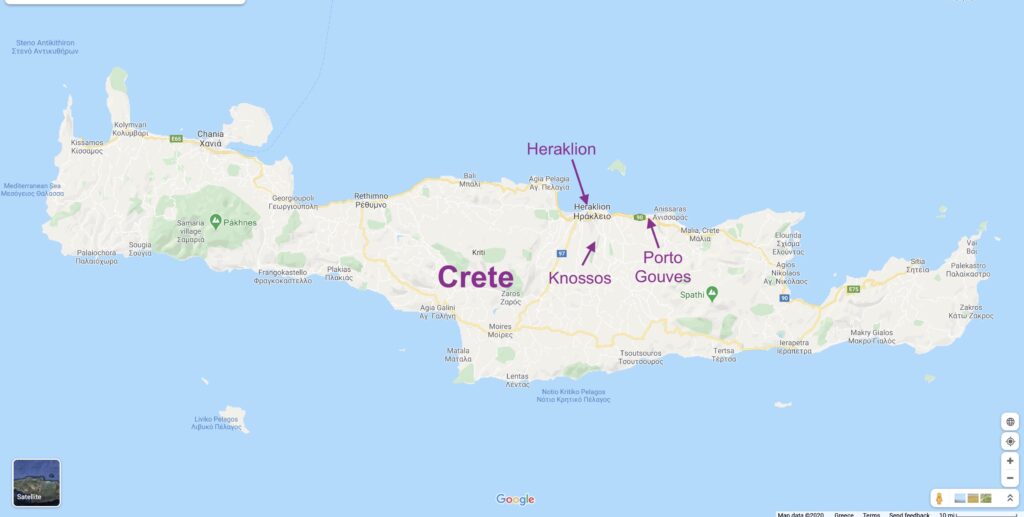
As we motored the final approach into Porto Gouves, a small privately run marina affiliated with an adjacent hotel complex, we were warned by the lone marina attendant to stay close as we rounded the breakwater-protected entrance. This was sage advice, especially for a pair of attention-fatigued captains who had been on the water all day. Large breakers crashing onto the town beach were just a boat length to our port side, ready to swallow us up if we didn’t execute our turn properly. This was all exacerbated by the fact that, with me on bow watch yelling back to Karen to ‘stay 10 meters off the breakwater’, Karen thought I meant to ‘stay at least 10 meters off the breakwater’, a prudent approach near most breakwaters where the boulders and rip-rap can extend out further underwater, like the hidden underwater dangers of an iceberg. But in fact I meant to say no further away than 10 meters, as the marina attendant warned me it got very shallow near the beach breakers. We got on the same page quick enough, but it reminded me of cockpit voice recordings between pilot and co-pilot right before a crash. We vowed to be more specific in our wording, and in these critical situations, to ask the other to repeat the directions back as a form of confirmation. 

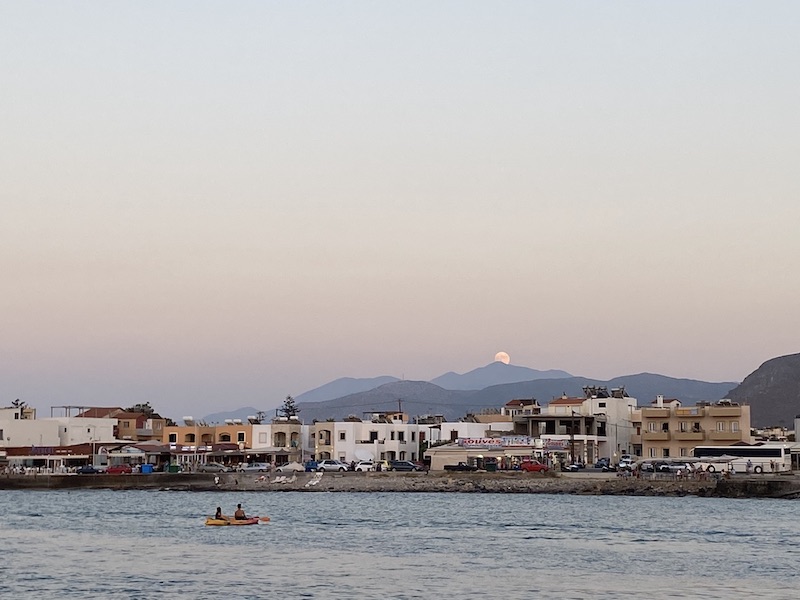
Late day in Porto Gouves, with a full moon rising

The Porto Gouves marina looked like a scene from ‘The Day After Tomorrow’, with only three other boats in the water, weeds growing up in the cracks on the pier, and a vacant and dark hotel building across the frontage road, having never opened for the session. After weeks of crashing into big seas under reduced sail in the Aegean, Sea Rose was coated everywhere with salt, and we took advantage of the unlimited water supply to thoroughly wash down the entire exterior, giving the salt no respite from our high pressure hose. Finally, Sea Rose was back to being a proper lady again. Whenever we do these big cleanups and re-provisioning at a marina, my thoughts shift to an expedition party coming back into civilization from the wilds of the backcountry. We are largely self-sufficient onboard Sea Rose which allows us to explore remote anchorages and make long passages to experience the beauty of Mother Nature up close, both above and below the water. But every once in a while, we need to come in from the wild to clean and stock up. We did it more often last year, with a lot of friends coming on a weekly turn to meet us at a marina, and when we do this, I long for the day when we can get back out ‘there’. 

Our initial exploits in Crete

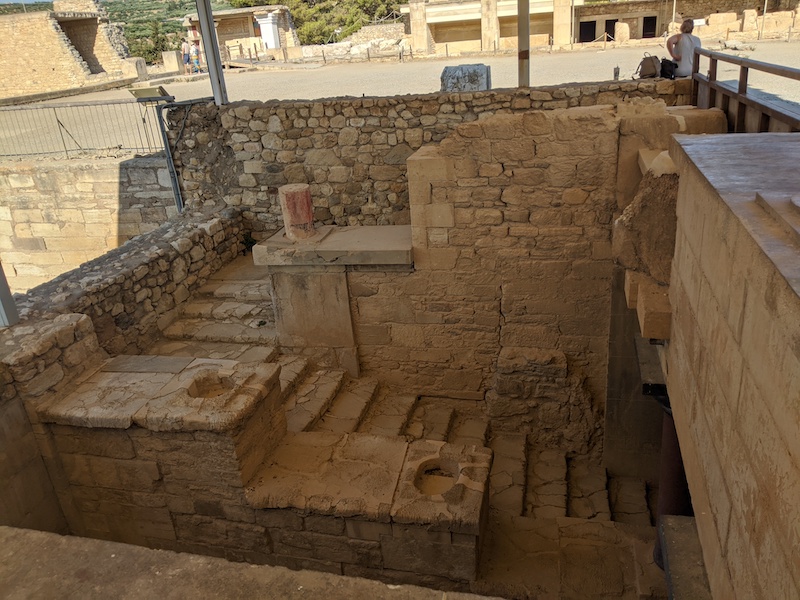
We rented a car from Caroline’s Travel Store, a women who effortlessly switched between five languages to help her customers, and we headed inland to find the archaeological site at Knossos, the main tourist attraction in this part of Crete. We hit the road early to avoid reports of large bus groups, and to avoid the heat of the mid-day. At the entrance, we heeded more advice and hired a guide, and soon I was as much intrigued by the history as I was about this charming little old lady Eva. Knossos is the most well known of the Minoan settlements on Crete, a palace originally constructed in 2000 B.C. and then expanded in 1700 B.C. These dates alone caused me to pause and reflect. I’m 57 years old. The stones upon which I walked, and the remaining walls and courtyards that Eva lovingly interpreted for us, were older than 65 of my lifetimes! And, from all accounts, the Minoans were a peaceful society, where they carved out a life on Crete with a population back then greater than that currently on the island! Life seemed pretty primitive to me, dare I say primeval, just 100 years ago. There were no cell phones, no internet, no refrigeration. The light bulb had just been introduced, flights at Kitty Hawk had just been launched, and the Model T was early in it’s production run, with the horse and buggy still prominent. Yet, the Minoans, 3700 years ago, had found a way to develop and sustain a safe, economically viable society. Less than 100 years ago, we had had two world wars and came close to annihilating our entire species with mutually-assured nuclear destruction. Too often, we toss aside the knowledge and expertise of prior civilizations, despite the clear evidence of a highly advanced culture, able to survive socially and economically in the absence of all the comforts and conveniences we have available today. 

Our introduction to Knossos, with our guide Eva
Restored staircase to the ‘Queens Room’, Knossos
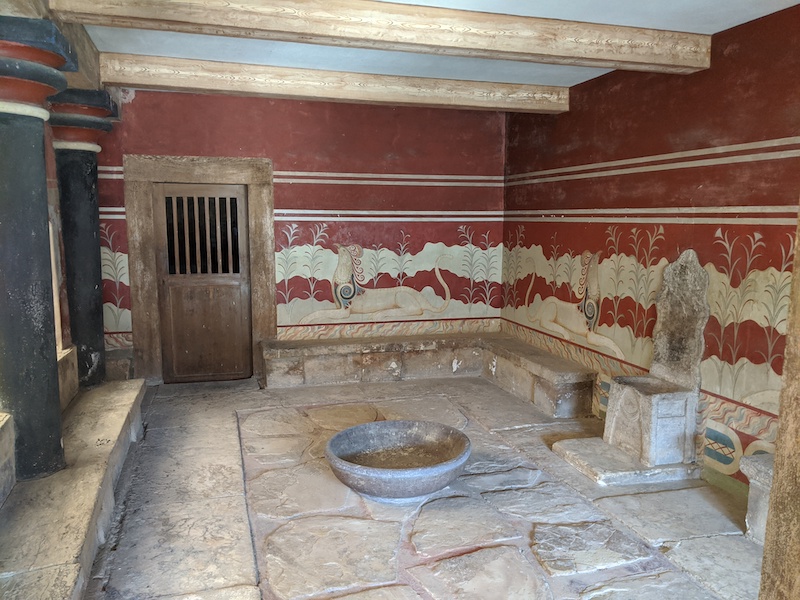
The throne room, and restored wall paintings, Knossos

In front of me were the remains of a four-story palace, and again, I was left bewildered. A single story building would seem like a challenge back then, in the absence of modern mechanization and hand tools. We need to re-evaluate our own self image as a superior society and dig for the lessons to be gleaned from these ancient yet advanced civilizations. 

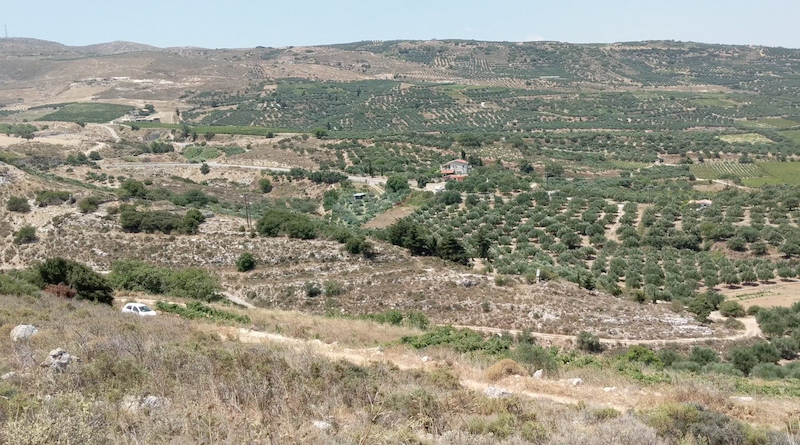
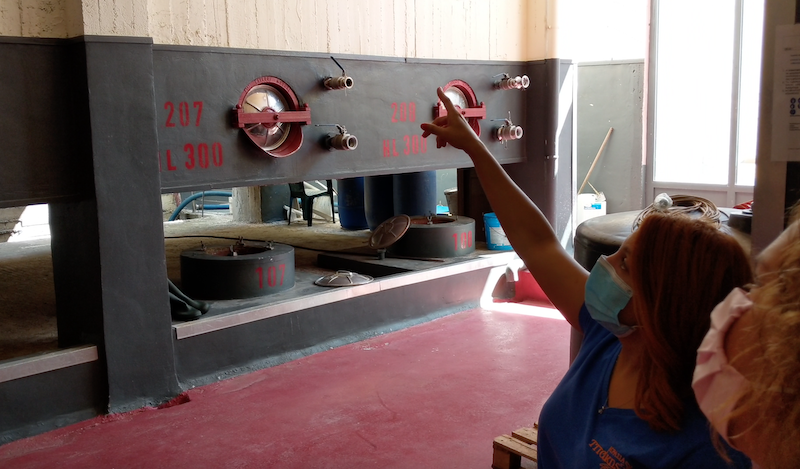
Bidding adieu to Eva, we went in search of the latest advances in wine making techniques on Crete. The island has an extremely tall mountain range that runs down the middle of the island, with fertile valleys throughout the northern interior. In recent times Crete has become well known for it’s respectable wines. Regrettably, Google maps has not kept up with the trend, and we took our rental car on a safari of sorts, with Google taking us off the main paved roads on a back wrenching pot-holed, stones-as-big-as-bowling-balls, ride over dirt roads. At one point, we had to abandon the car on the edge of a hillside vineyard and climb the rest of the goat path by foot, discovering a perfectly respectable road leading into the spacious winery parking lot! On our second stop, at Titakis winery, we were hosted by a cheerful young woman, Eleni, who had recently finished her wine studies in Athens and returned to her home in Crete to share enology responsibilities with the founder. The wine locker on Sea Rose hadn’t seen such a boost in inventory since our travels around the interior of France!

Abandoned rental car, in the olive and vineyard fields of interior Crete
Lyrarakis Winery, Crete
Titakis winery tour, with in-house enologist Eleni showing us the massive concrete storage vats

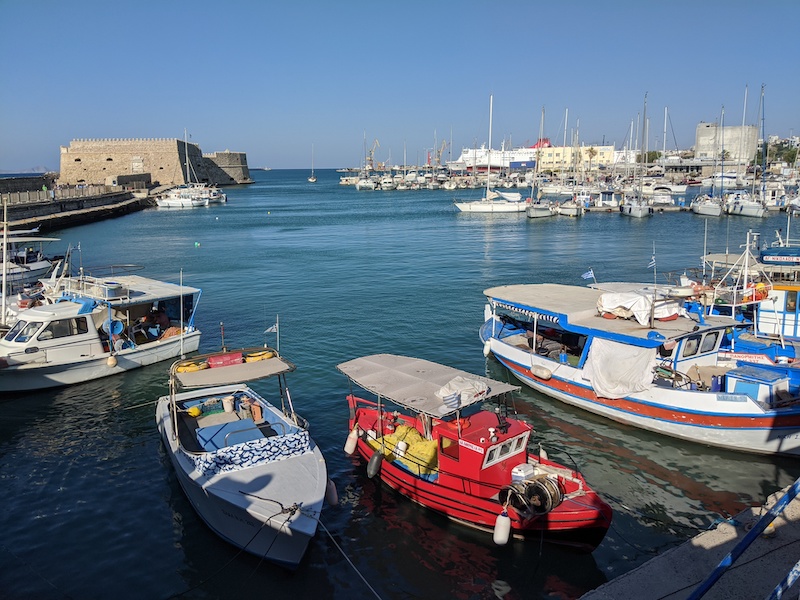
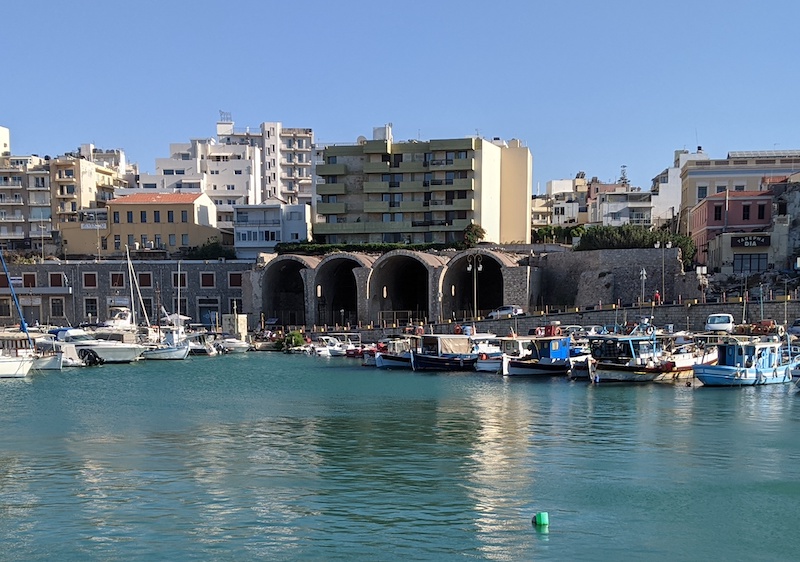
Our rental car wanderings took us to the nearby city of Heraklion, the nerve center of the island, and with a surprising number of flights landing and taking off despite the pandemic. We chose to duck the mid day heat by attending the archaeological museum with its many restored artifacts from Knossos. But I must confess, wearing a mask for extended periods, even inside buildings here, is a fatiguing, sweaty affair. I couldn’t wait to walk through the exit doors and into the heat but mask-free world. We had been told to not expect too much from this big city, and as we walked part of the waterfront, there was no mistaking this was a rough and ready town. The one notable piece of eye candy was the Venetian harbor. Along many of these northern cities, you will find a big modern harbor enclosing a small, shallow, often nearly round inner harbor, built by the Venetians. Often adorned with a tower or full-on castle at the entrance, their diminutive size and depth can make them unsuitable for most larger craft, giving one the advantage of appreciating their beautiful construction absent the super yachts and the associated over-commercialization. The Venetians also put their handicraft to work building showcases of long arched-roof stone boat houses, many of which still ringed the harbor, some converted for modern use, others left to age gracefully.

Heraklion’s inner Venetian harbor, guarded by a restored fortress
The arched-roof Venetian boathouses, Heraklion

With our first impressions of Crete firming implanted in our memory, it was time for us to make our way west along the northern coast. From this mid-point, the next major harbor of Rythimno beckoned. Our craft – clean and bright and re-provisioned – was ready and willing to take her curious caretakers onward. Crete – that big, odd island at the bottom of Greece – was starting to unfold its treasures before our eyes, and we were eager to take it all in.