
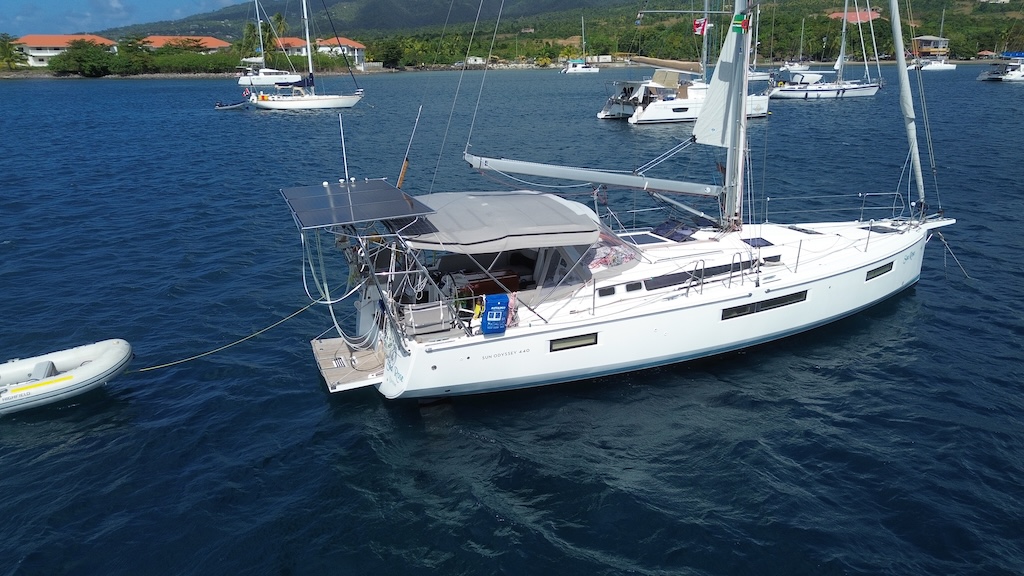
Sometimes, Karen and I imagine an existence where we rent an apartment overseas in one of any number of desirable locations. Somewhere where we can settle into a place, maybe for a month, not as much as a local resident but more than a tourist. We would walk to the local bakery, stop at our favorite produce stand, and experience the comings and goings of people different from us, in a different land, full of unusual scents and scenery. Sand would be nice too! A trip to Rome or Lisbon or Hong Kong is, without a doubt, a life-expanding experience. But to live there for a month? Now that would be life altering. Unless you are a digital nomad, these are musings that are limited to the retiree crowd. But, hey, a dream is an indispensable first step.
We have been able to see a lot of variety as we’ve sailed Sea Rose around Europe and the Caribbean. But we rarely stop for more than a day or two at a time. Many years ago, as we sailed through the Caribbean with our kids onboard Thalia, we sailed right on by Martinique, as we understood it was hard to visit unless you spoke French. Well, this time was different! As we sailed into Le Marin, on the southern end of Martinique, after a two day passage north from Bequia, we had planned a 2-3 week stay to have a new solar arch installed on the stern of Sea Rose. But, as we reported previously, things took a turn down into Complicated Canyon as we grappled with a damaged skeg from a fish line that wrapped around our propellor shaft. A month previously, we had scheduled our solar arch installation with InoxAlu. Technicians here in Le Marin are heavily sought after and it can be a long wait to get on their schedule. If we kept the boat out of the water for the prop skeg repair, we would miss our solar arch window. Alas, we decided to have the mechanic put our propellor and shaft back together so that we could launch and gently motor over to the dock at InoxAlu for a week of work on the solar arch and then we would return to the shipyard. The company we found to do the fiberglass repair of the prop skeg was booked out to mid-January as it was, so our ‘resident’ status in Le Marin was quickly turning into a reality, our poor French skills be damned!
In the end, we spent just over six weeks in Le Marin. I can recommend no more than four weeks for this kind of deep-dive travel. At six weeks or more, characteristics that seemed charming about a new place can start to get on your nerves. Even my go-to comfort food of Pain Chocolat had to be throttled back – only the French can stay trim eating so much bread! Traffic here – both the speed at which people pass by pedestrians and the way they block sidewalks and park hither and dither – can start to rank on you. And then, of course, there is the cigarette. I used to wonder, when smoking was outlawed from restaurants and most public places in the U.S., whether it would spell the demise of the tobacco industry. Ha! The rest of the world, and particularly the French, smoke enough to make Philip Morris and the other tobacco majors an excellent investment option, if altruism meant nothing to you. Countless times, Karen and I would sit down at a restaurant, only to be joined later in the evening by 100% smokers in all compass quadrants. Putting my stinky clothes away in the evening reminded me of those days of yore when smoking was allowed on planes; you were all around it, like the victim of an invasive species.
But, hey, don’t let that stop you from visiting Martinique or any other French territory. For a few weeks, you’ll have a fine time dining on exquisite and reasonably priced food, share stories with locals who speak more English now than they ever did before, and you might just score an excellent rental like the Renault Clio (shamless plug for a co-marketing gig!). For Karen and I, we benefited from the collective wisdom and handiwork of some of the boating world’s finest professionals.
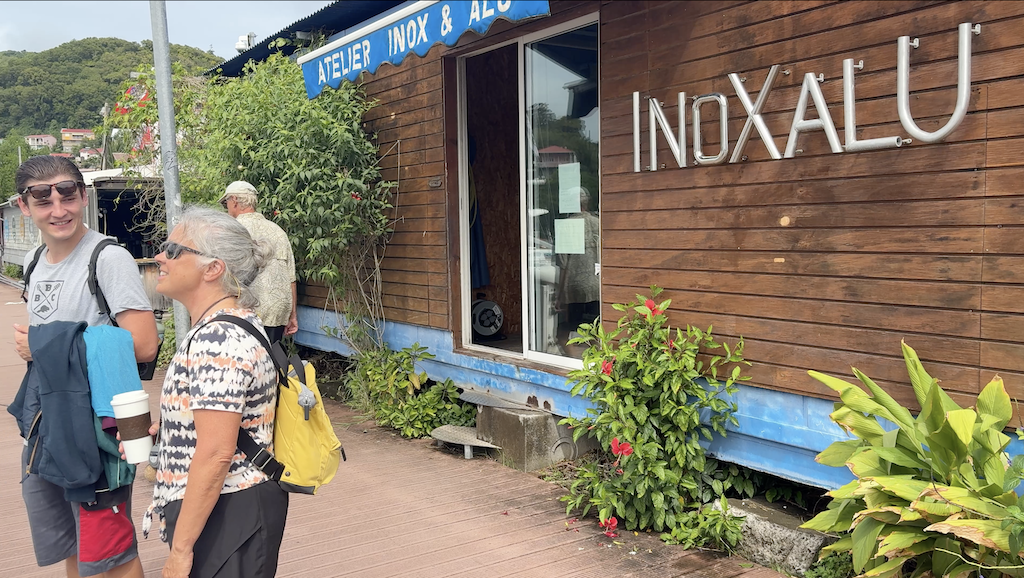
In less than a week, Kai and Katharina (husband and wife extraordinaire from InoxAlu) crafted us a new solar arch, including stout davits to hold our dinghy high off the water. Fredo from Electrotechnique Services dovetailed like a finely choreographed performance with Kai to install three big bifacial solar panels on the arch and snake all of the wiring for the panels, and a cadre of antennas, down into the boat, feeding our batteries with lots of delicious electrons gobbled up by our new lithium batteries. Fredo kept apologizing unnecessarily about his English as he sifted through the many software menus and we dialoged over the correct configuration settings. His cheery persona will embed itself deep into our long term memory.
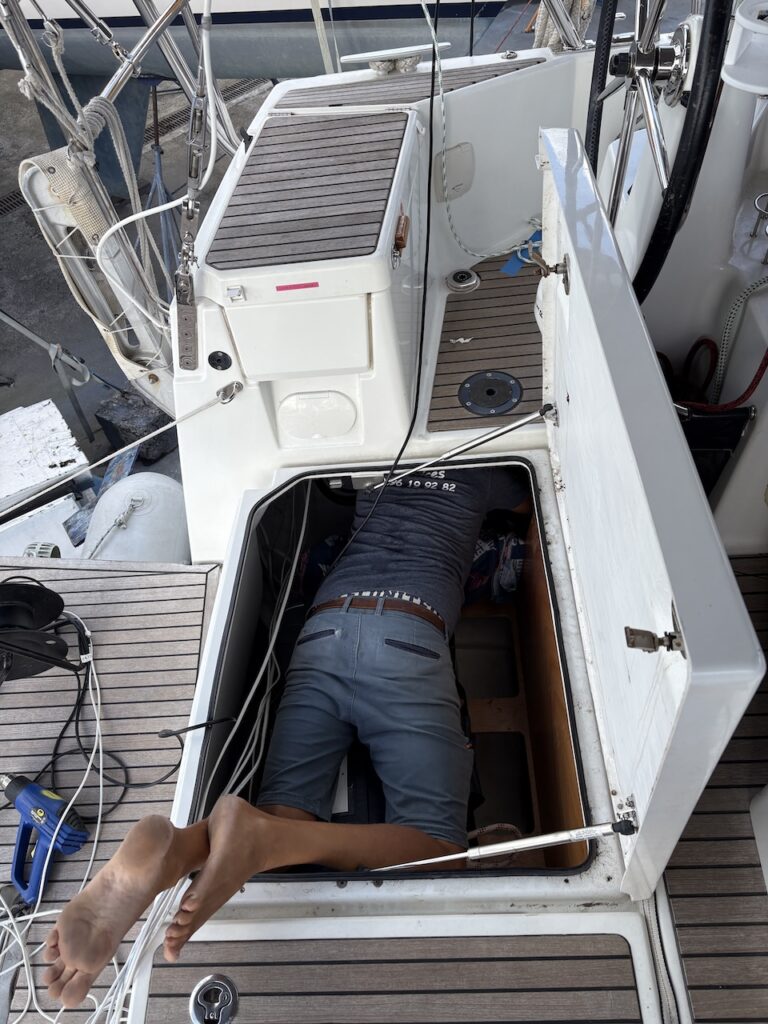
Roman from Inboard Diesel Service, a gentle soul, careful and thoughful, pulled apart our propellor, shaft, bearing and coupling with the confidence of a professional. Seeing these parts disappear into his workshop was like tearing out a part of our soul. After all, most sailboats spend at least 25% of the time motoring. But he stood ready to answer my many questions and free up his schedule when it was time to put Humpty Dumpty back together again.
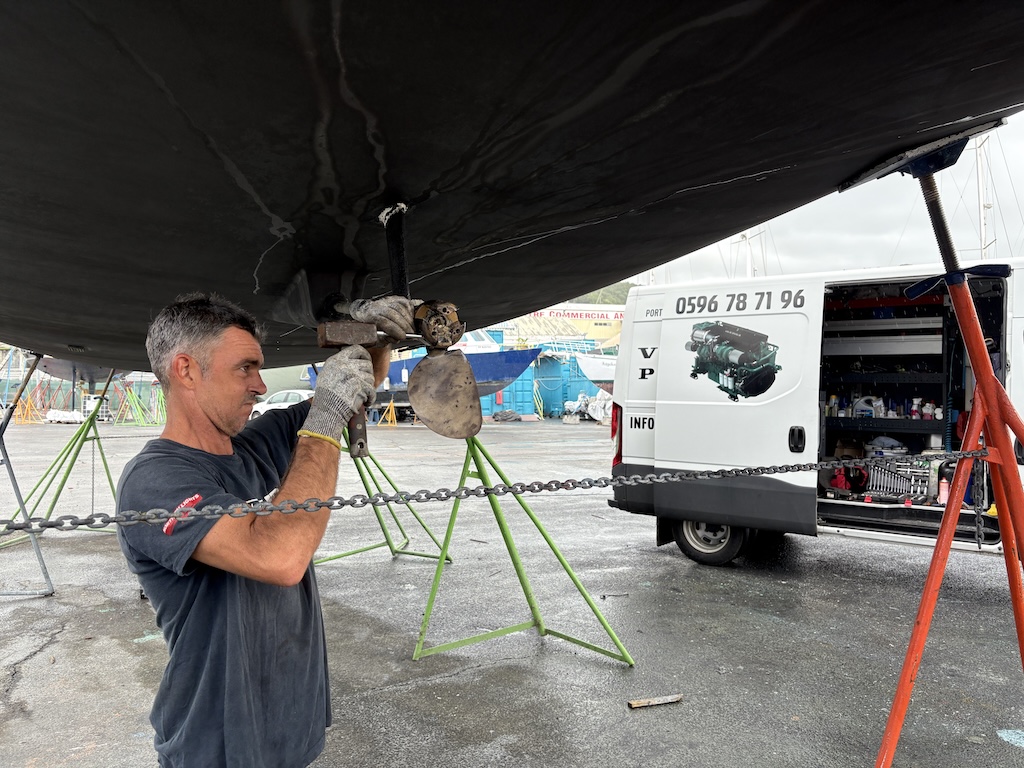
Manu, from Alize Composites, deep into building new fiberglass boats with gelcoat so shiny you could easily be blinded, took time out of his busy schedule to set us on the straight and narrow. With the propellor shaft removed, he and his team drilled, chipped and multi-tooled their way through large chunks of fiberglass to remove the entire skeg, leaving a scary looking hole in the bottom of Sea Rose. Earlier on, he had given us the name of several other fiberglass guys in the area that had more time in their schedule, but we chose to wait until he was free, having confidence in his skills for such an important repair task.
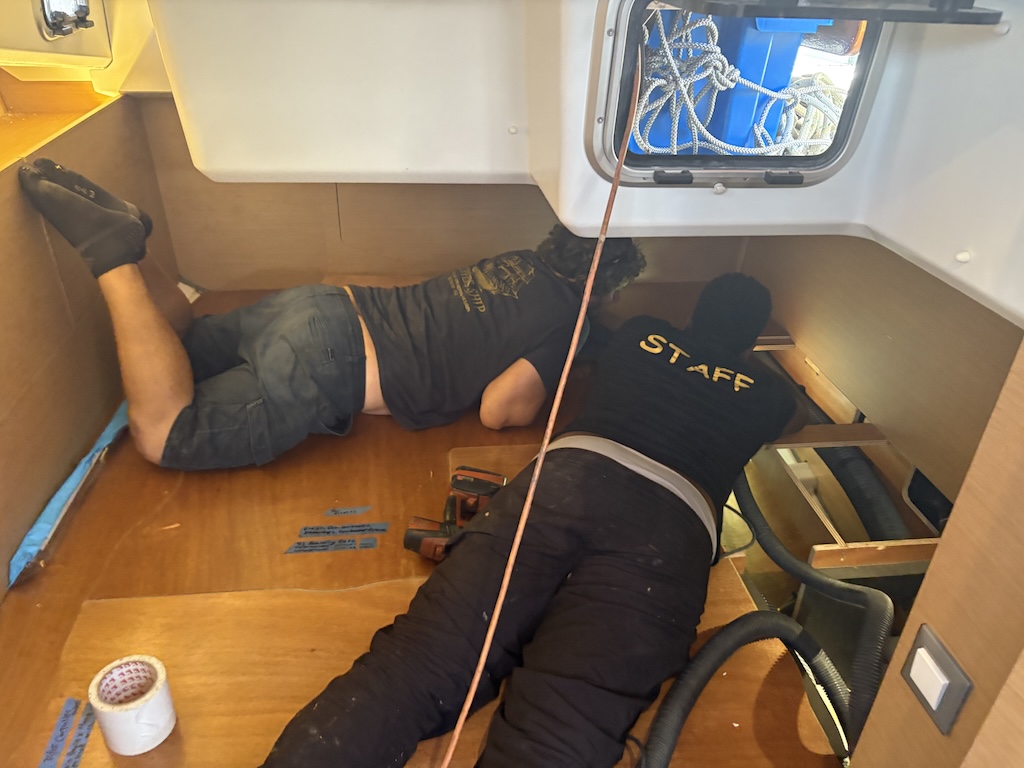
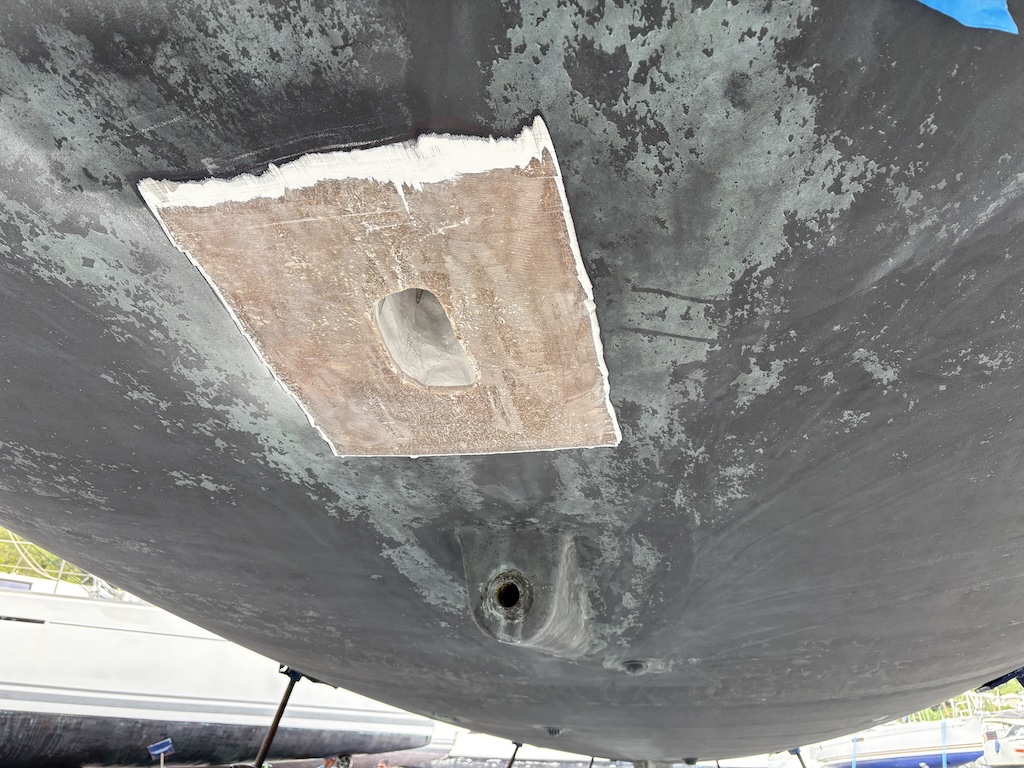
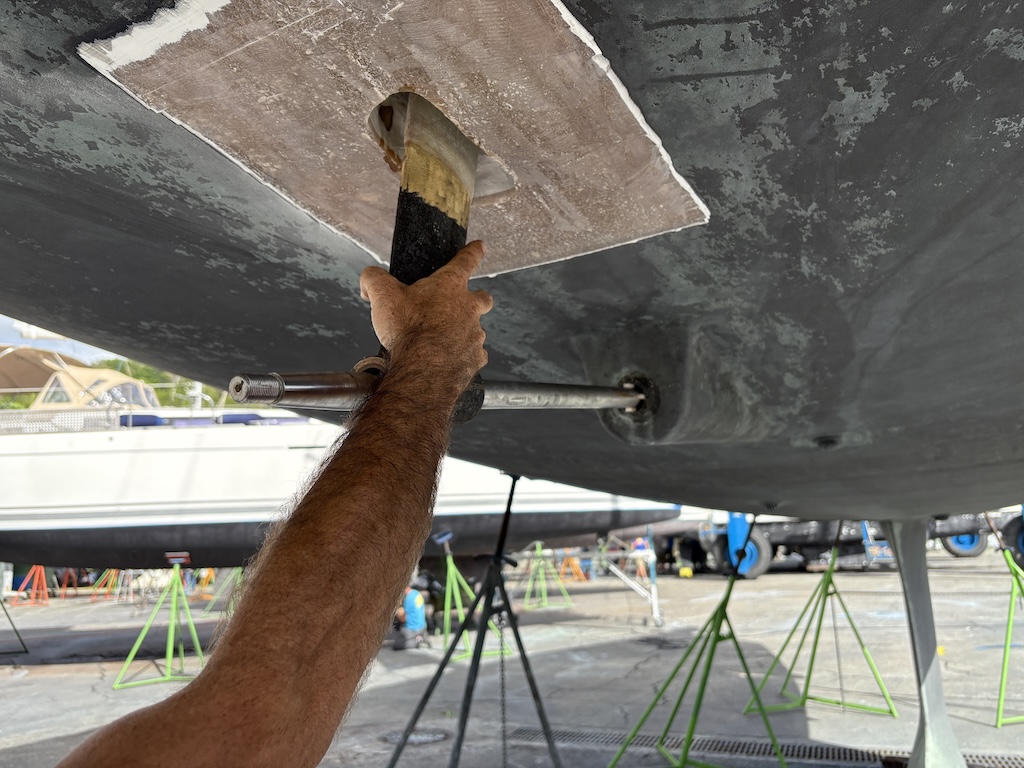
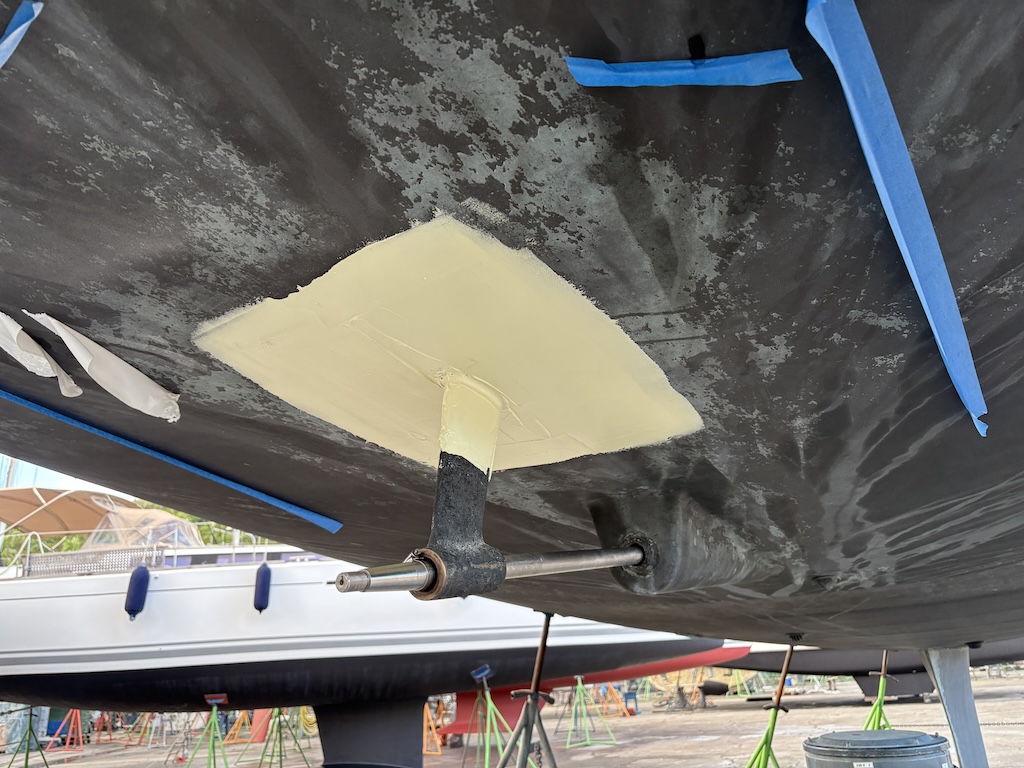
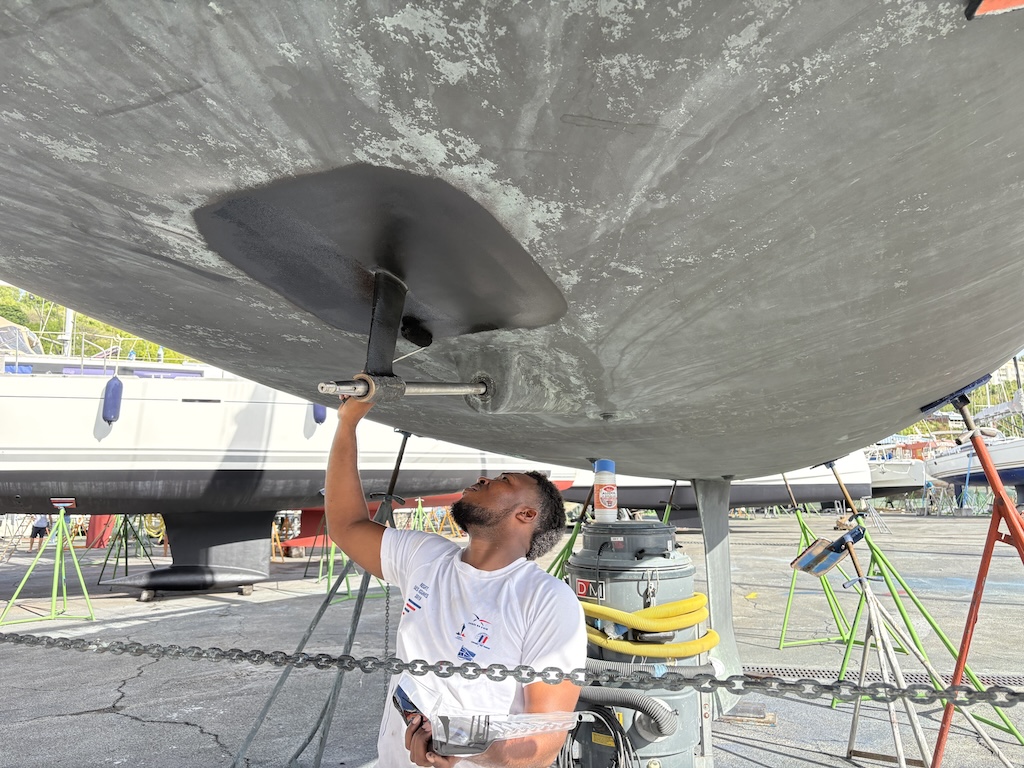
With the demolition done, Manu’s crew, together with Roman, remounted the skeg, confirmed its alignment with the engine, and then poured fresh new epoxy resin into the hole to secure the skeg from future damage. They carefully fiberglassed the outside of the skeg/hull connection, applied fairing compound and primer, and finished it all off with new antifouling paint.
These were the works of exquisite craftsmen. While it was unfortunate to be stuck in Martinique for this long, we were very fortunate to have this all happen in a place of such skilled individuals.
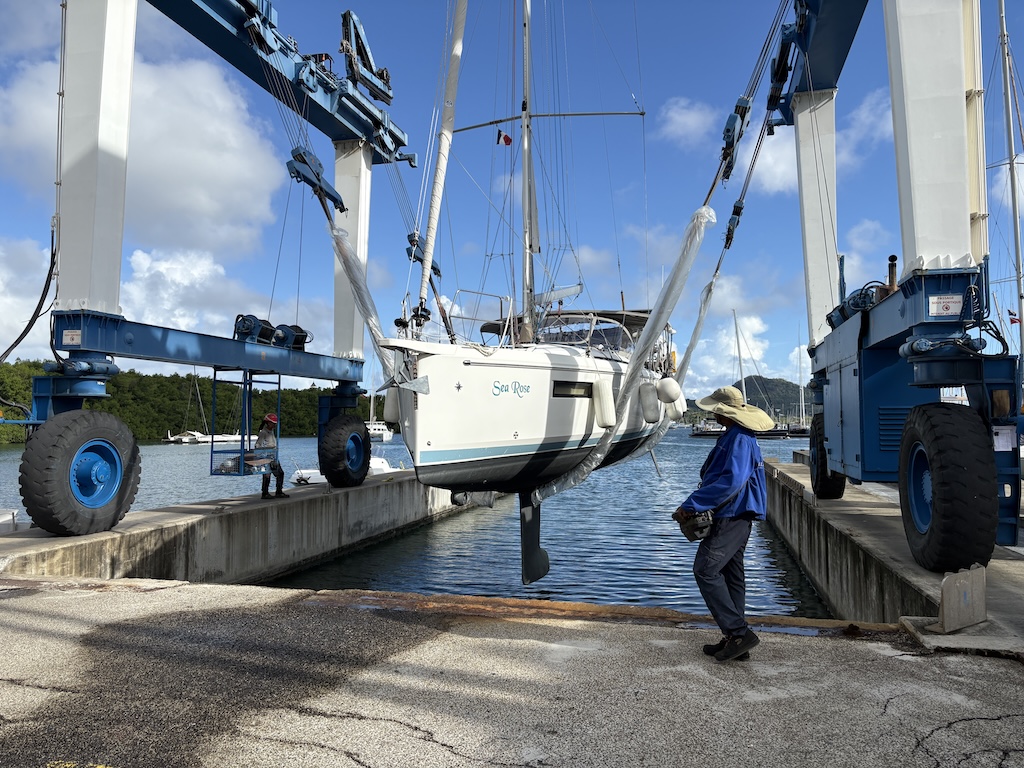
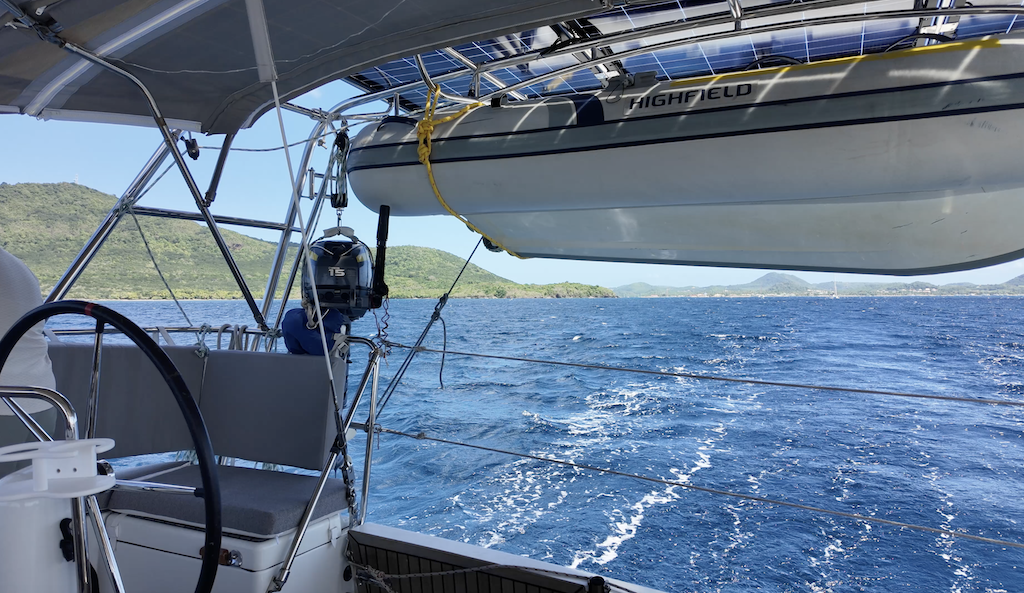
As Sea Rose splashed back in the water, we reveled in our newfound power. A smooth turning engine-driven propellor for those windless days, and oodles of electricity – more than we could ever imagine using up – delivered to our batteries by way of a big, new solar array. Ahh, what will we do next with so much power?!
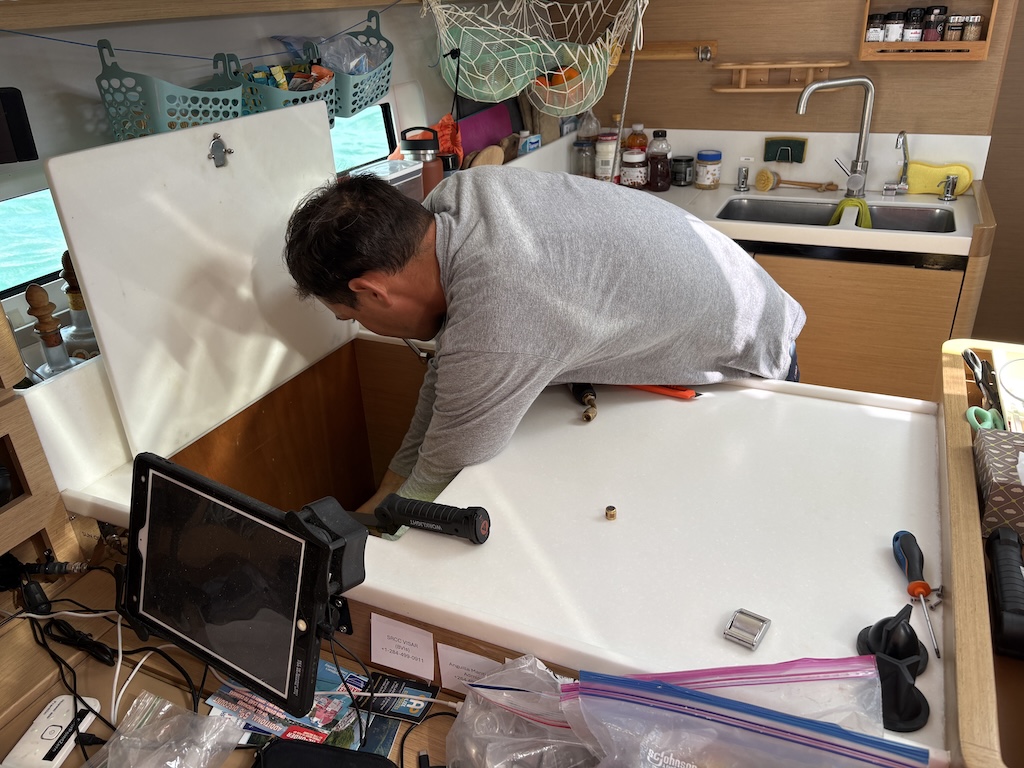
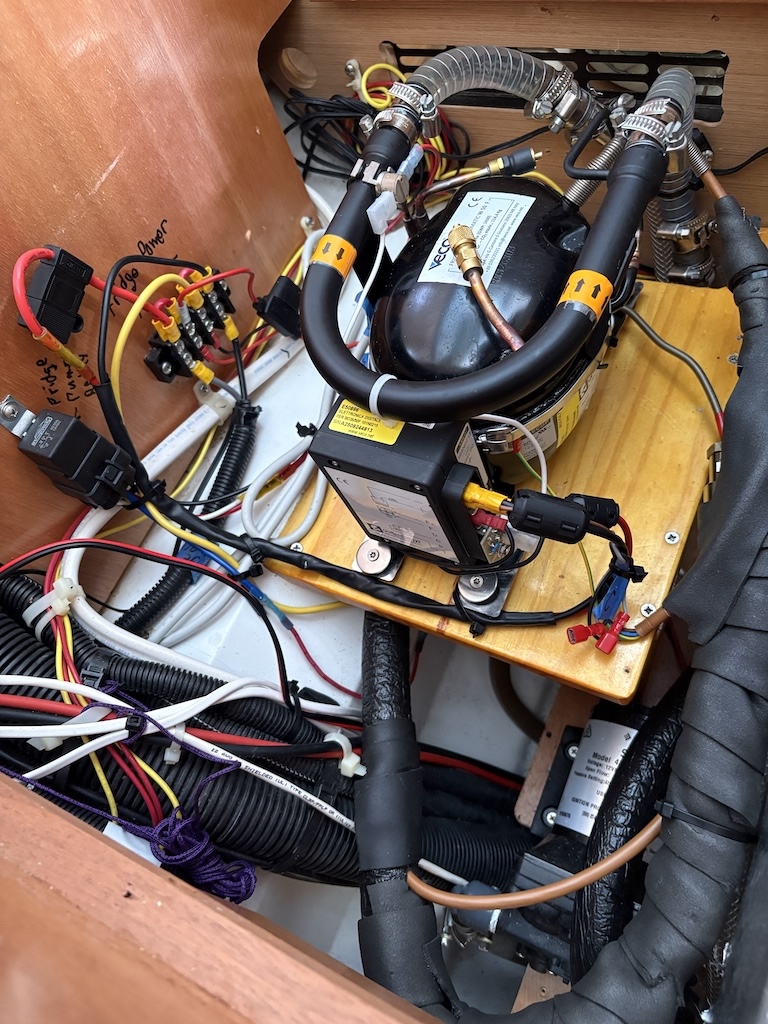
But wait! As we pulled away from the shipyard, we noticed that our refrigerator was not cooling down. Martinique had one final tentacle wrapped around Sea Rose and it would take us another four days and a new water-cooled compressor to get us back in complete working order. Sailing in the tropics without a means to keep the proverbial beer cold was not an option, especially with the surplus of power we had to burn.
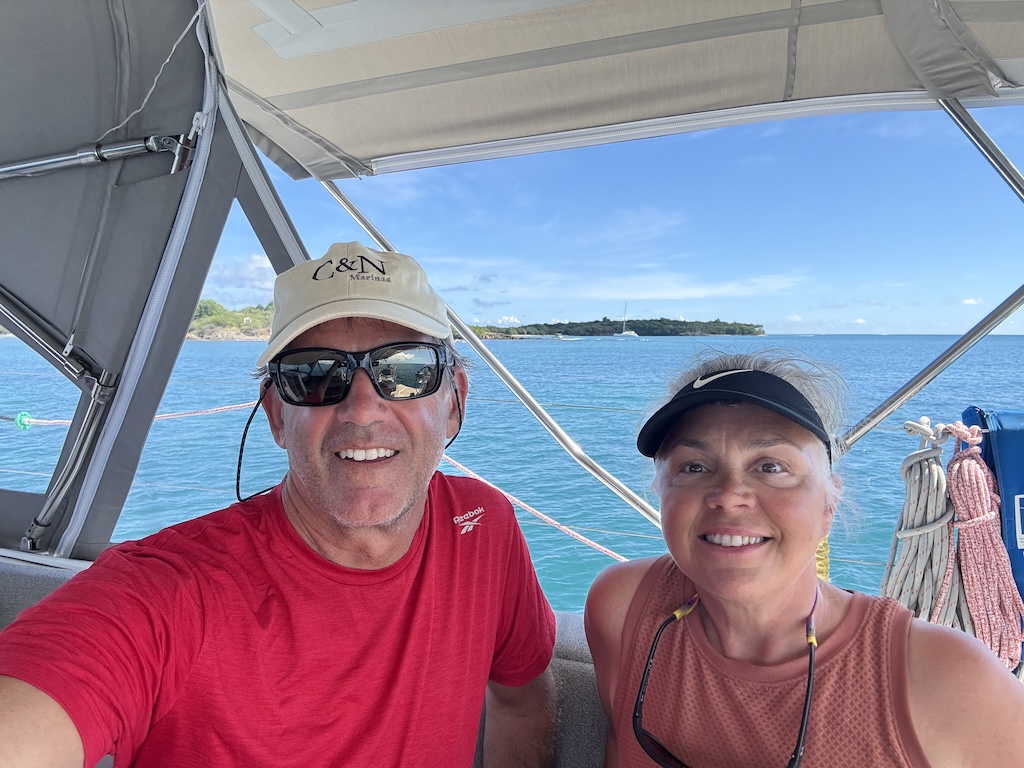
It was time to point our bow north and make haste with our heavily rejuvenated maiden of the sea!
A fun read. I hope you shared this with all the fine technicians! See you out there somewhere!
Thanks Mary, hope we can cross paths again soon!
Great read, and some big jobs. The skeg rebuild looks flawless. Is she running smooth with no weird sounds or vibrations? What type of prop do you have?
Hi Jim! Yes the new prop skeg is working great and the boat is running smooth. We have the Flexofold prop, very happy with it. Fair winds!
Suffice it to say you sure got a healthy dose of Martinique!
We indeed did, maybe for a lifetime!