
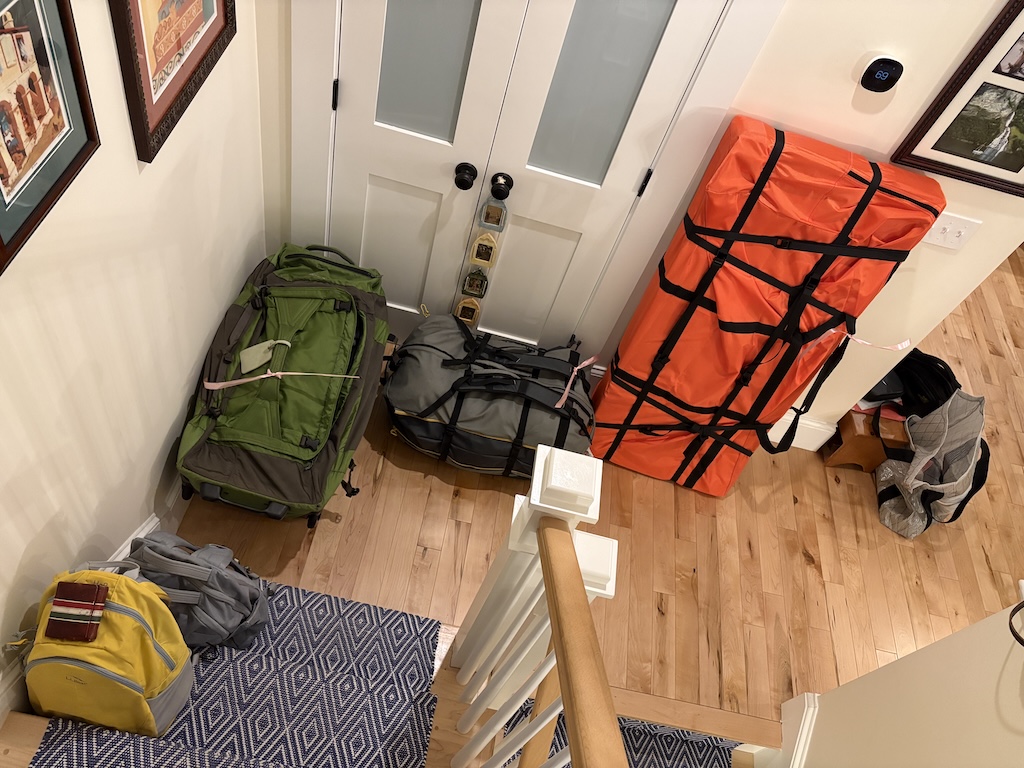
I knew it was a bad omen when the captain came on the PA and announced, ‘Folks, we are going to have to hold here on the tarmac to burn off fuel as we are currently overweight for take-off.’ Karen and I did a long, slow turn towards each other, meeting eye-to-eye. Friends know us as repeat luggage offenders with our overpacking of checked bags, and this flight was no different. We were headed from Boston to Grenada for the start of season 8 onboard Sea Rose, and we were packed to the gills. Our checked luggage included four additional solar panels in a long thin box encased in a bright orange duffel bag. I had tried to check these exact same solar panels on a pre-trip to Grenada back in September, but JetBlue rejected them outright, saying they do not accept items in cardboard boxes. This time, safely disguised in their duffel, the agent swiftly sent them on their way, without a moments hesitation, to the baggage conveyor and into the hidden inner sanctum of Logan’s luggage underbelly. Now, to hear our plane was overweight, we could only chuckle. Season 8 was already off to an ignominious start.
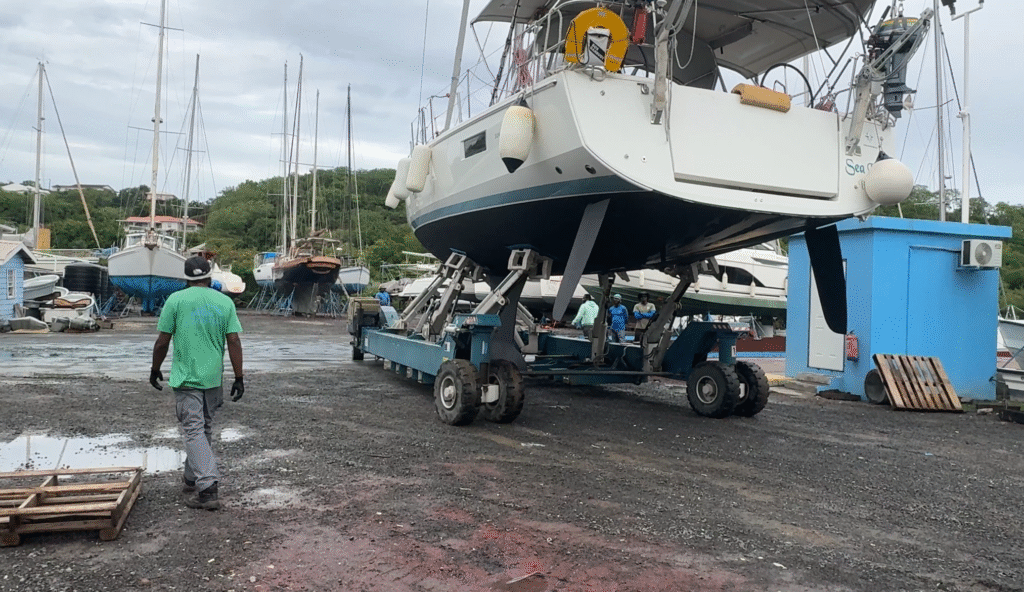
Truth be told, we were a little out of our element, heading to the boat in December. We had spent a splendid summer in New England, the first since 2016, when we began this off-kilter idea of sailing in retirement. We normally would be coming home at this time from a season in Europe to spend a Fall in the grandeur of changing leaves and the cooling air as prospects and plans were made for winter outings. But instead, we had hauled Sea Rose out in Grenada in April after spending the winter in the Caribbean, following our Atlantic crossing with the ARC+ rally, which in turn followed a busy summer of 2024 starting in Tromsö, Norway. We were inverting our plans, sailing in the winter in the Caribbean, avoiding the drama of summer hurricanes and heavy rains, and spending the summers at home.
Arriving at the Maurice Bishop airport in Grenada, our big orange duffel of solar panels caught the eye of the Customs agent, who made us pay an import duty for the pleasure of keeping them in our possession. Oh well, I thought, Sea Rose will have an impressive array of 11 panels on her bimini when we were all done, pushing us over the 1 kilowatt total output level. No more burning of fossil fuels to keep our batteries charged. We would nail that option into the coffin where it belonged!
As I mentioned, summer in the Caribbean is fraught with the risk of hurricanes. We had hauled out in Grenada as it is far enough south that most hurricanes miss it, and insurance rates are slightly less stratospheric then they normally would have been otherwise. But it is still hot, and still wet. I had come down in September for a week’s worth of work where temperatures regularly hovered around 90 degrees F. Without several gallons of water intake a day, I would have likely shriveled up into a raisin and been packaged into a fresh carton from SunMaid, hoping at least to be labelled as a golden varietal. Our early December arrival was no different. But we had the good fortune of a local company’s expertise to sew up a new bimini and dodger for Sea Rose. She was going to strut her stuff with pride as we guided her through the islands, gracing us with plenty of shade. And should the rains come, we would savor a pleasant retreat from the downpour.
Well, at least that was the plan. The bimini makers came onboard the first day after our arrival to do a final fit of the fabric, following our instructions closely on where to sew zippers for the 11 panel mini electric utility overhead. They had chosen to build a separate fabric panel on top of the regular bimini panel that had all of the zippers sew into it exclusively for the solar. If we ever wanted to change up our solar system, we could change that fabric panel instead of the entire base panel. After most of the day of panel zipping and wiring and grunting, we had our beautiful new bimini in place. But then the rain came. And the puddling. And the leaking. We struggled for several days with different solutions, but in the end, the solar layer had to go. It was too much weight, and the curvature of the bimini was not enough to shed water, particularly the kind of sudden, shocking downpours of these tropical islands. It was immensely frustrating. We went from a solar powerhouse and electrical independence, to no renewable power at all, save for a tiny 80 watt panel Jeanneau had installed at the factory, siting mostly in the shadow of the boom, producing next to nil power.
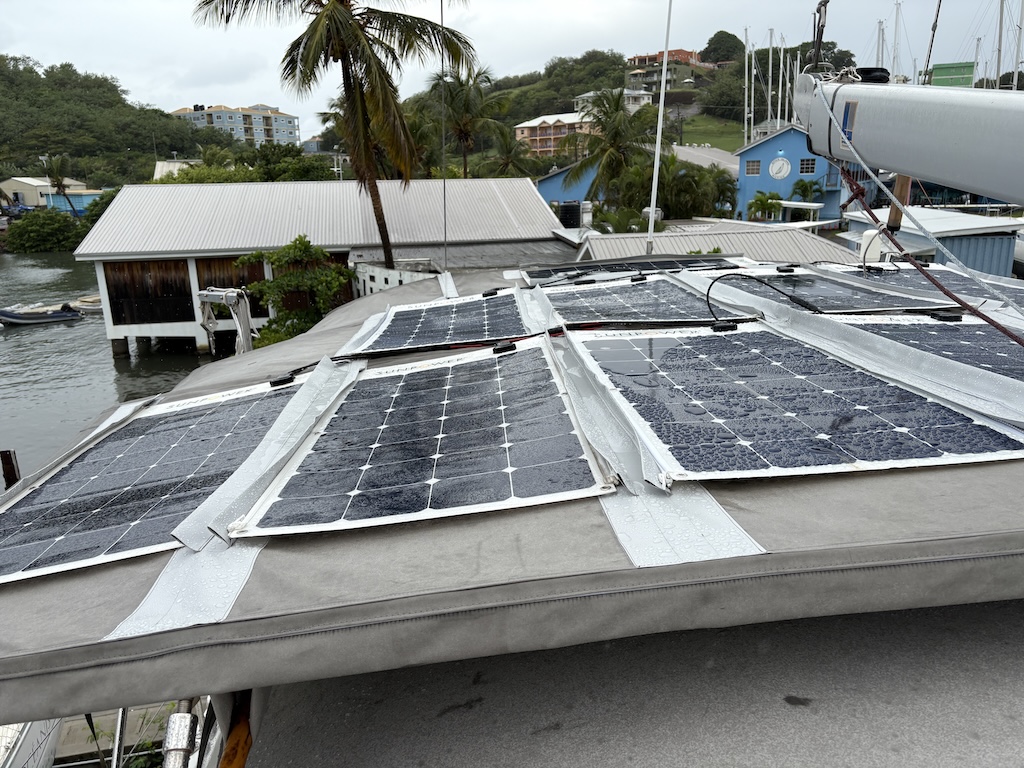
To be fair, we had been struggling with the solar-panel-on-bimini approach since we first launched Sea Rose back in 2018. The flexible panels would shift in high winds, but we needed more power and kept adding more panels each season. Still, it was always a concern for us in rough weater. It was time for a new plan.
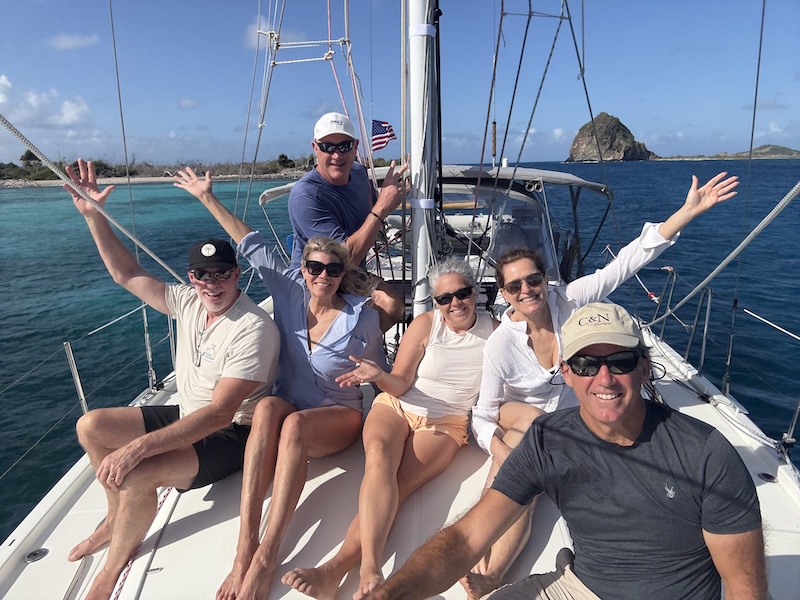
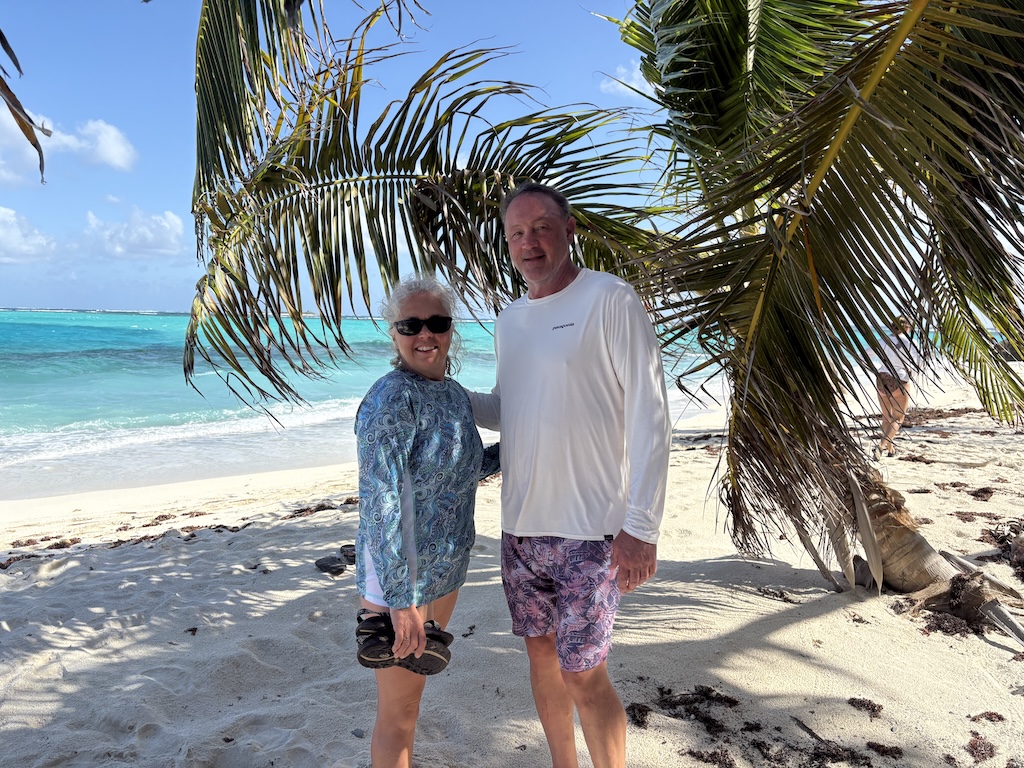
But first, we had special guests coming onboard just after we launched. Karen’s brother Gary, his wife Karen (yes, two Karens!), cousin Tim and his wife Lisa. We had last all been together back in 2018, as we explored the west coast of Italy. Gary and Karen had also sailed with us along the southern coast of Ireland to Kinsale last year. We had all worked hard to find a date that would be best for everyone – a challenge as we all get older and our extended family and children draw us in many different directions. We had told them that sailing north from Grenada to see the St Vincent and the Grenadines area would be worth interrupting early December plans to otherwise prepare for Christmas. And so, all 6 of us crammed onboard the 44 feet of Sea Rose.
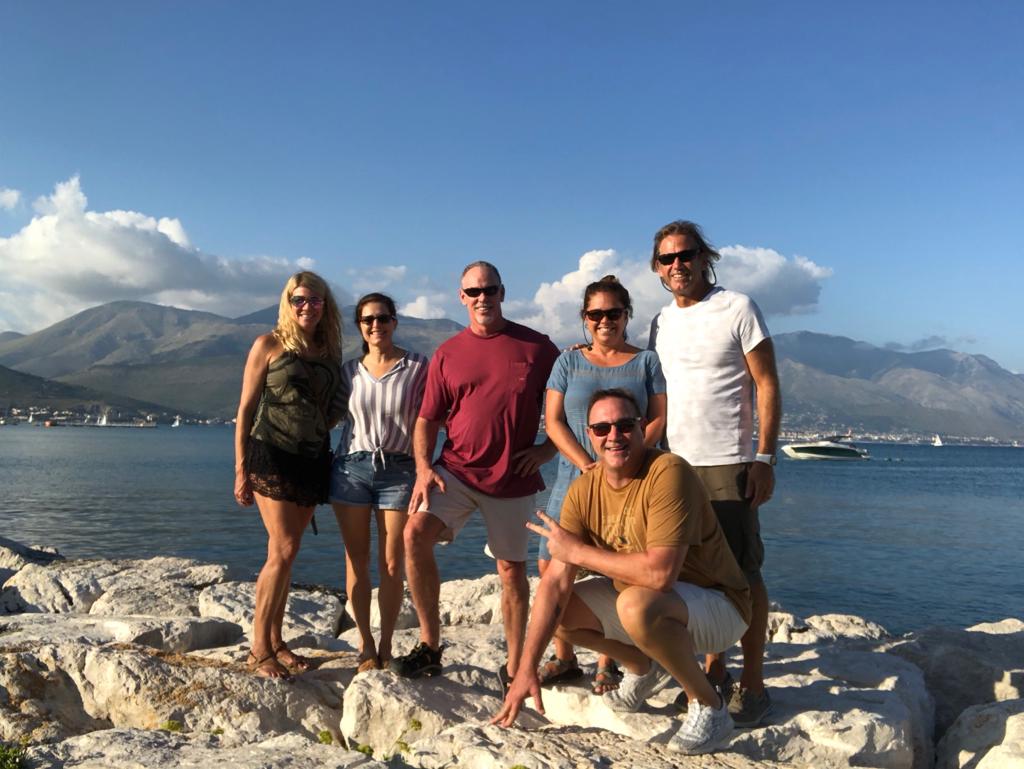
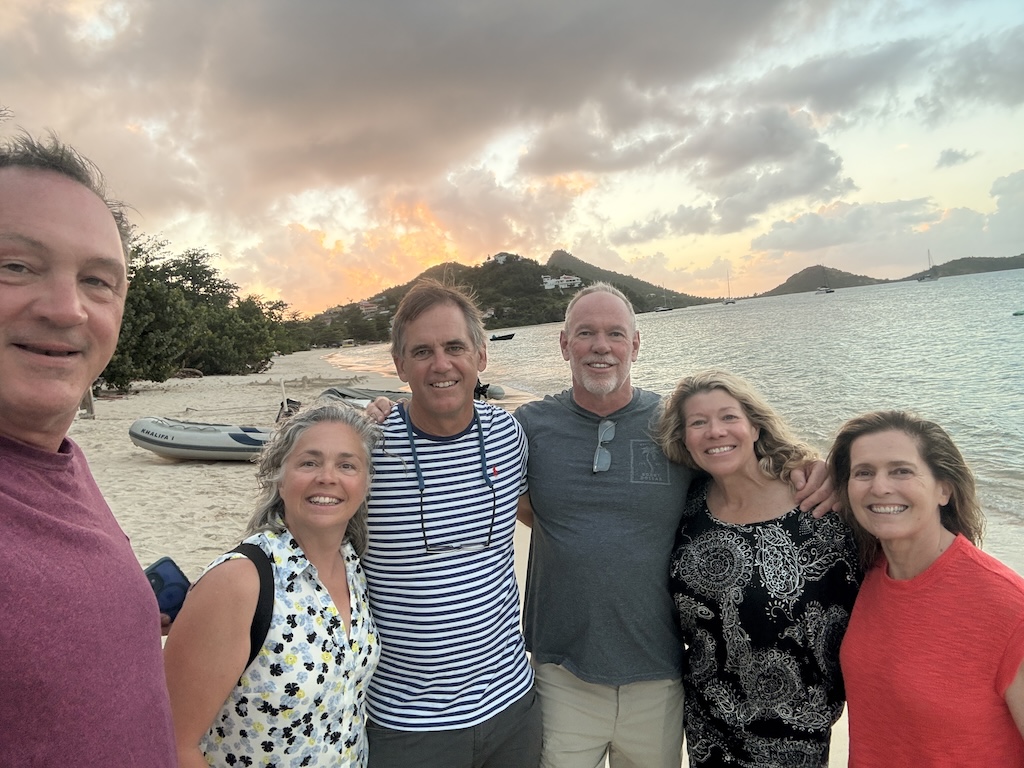
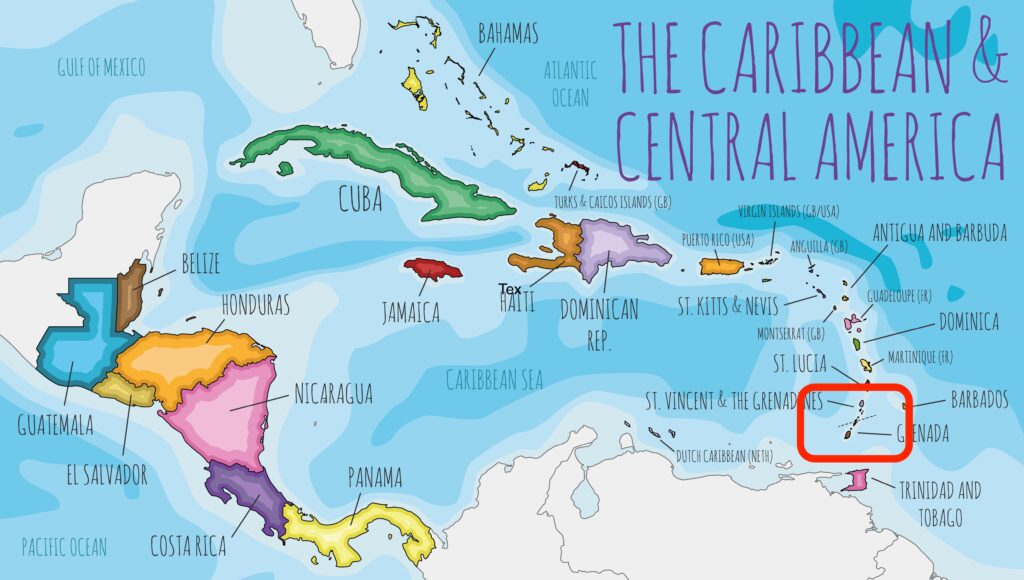
These were waters we had sailed through several times before, both on our own boat and as captains of charter catamarans. We couldn’t wait to show our family the best of the southern Caribbean.
19 years ago, British sculptor Jason deCaires Taylor unveiled the world’s first underwater sculpture park. Scattered across a coastal bay just north of the Grenada capital of St Georges, he placed a beautiful variety of art pieces at depths visible by snorkeling – a ring of humans holding hands, a single man at a desk with a typewriter, a priest with his hands swept back high above his head, and the list goes on. Some of the works are hidden in small grottoes and part of the fun is searching out each work like a treasure hunt.
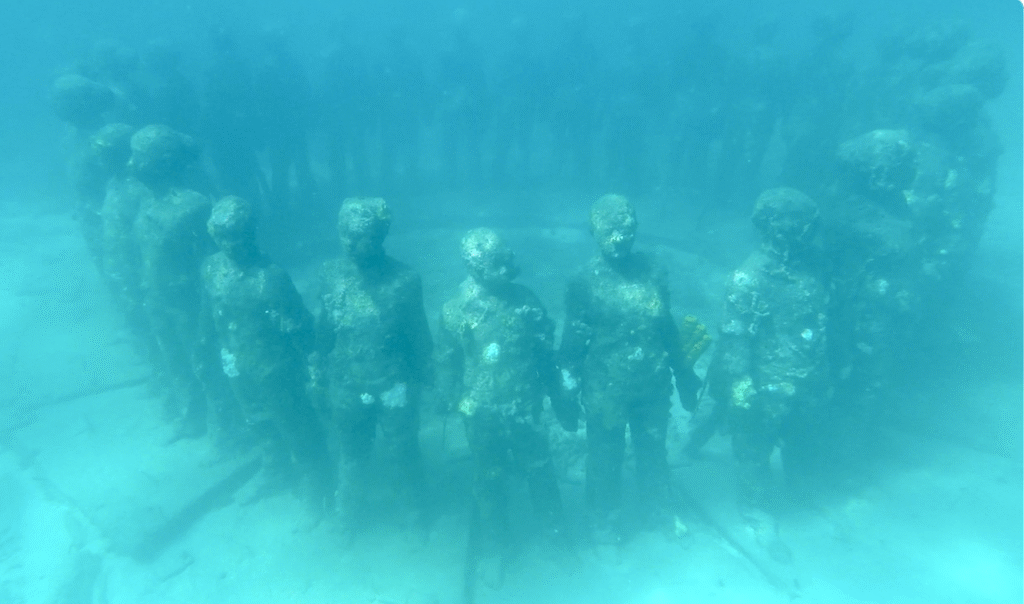
From the sculpture park, we sailed north for a night away from civilization on Ronde Island, and then onward to Carriacou. Here, you feel like you must have entered the Grenadine islands, but yet Carriacou is part of the country of Grenada, allowing us some time to explore without the hassle of customs clearance out and back into a new country.
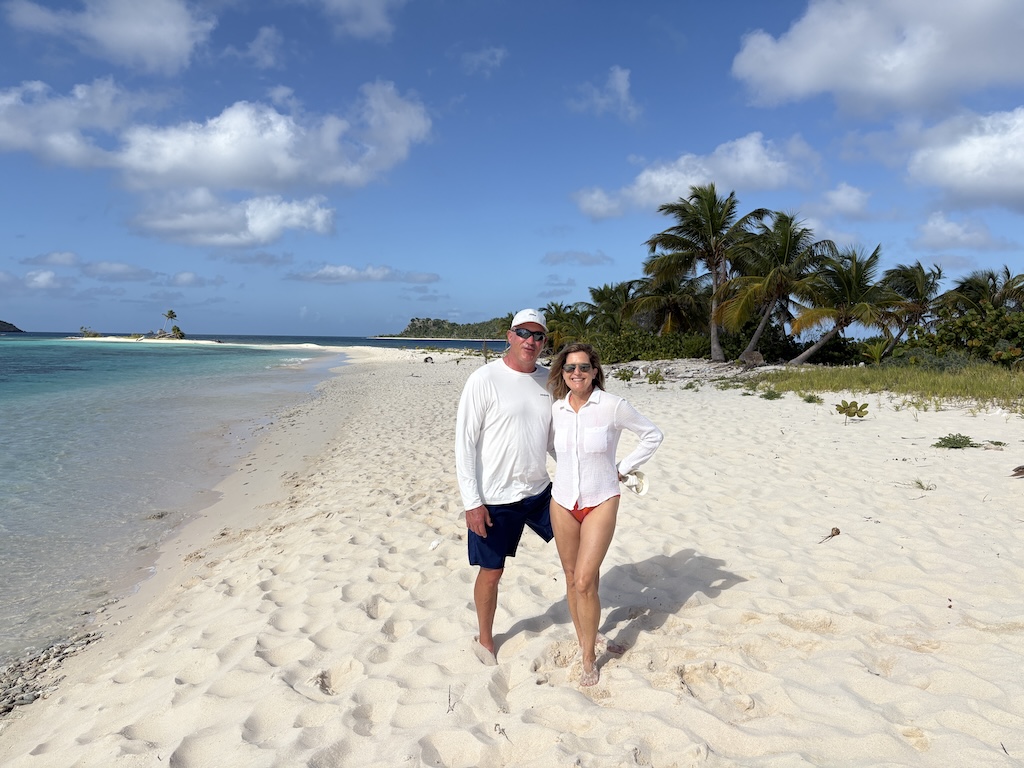
One of the classic images I pull up when someone asks about the Caribbean is a picture of Sandy Island. It is a long skinny sand spit with a cluster of palm trees heavily keeled over like they are on a walk back home after a night of too much Irish whiskey. Or local rum. We had first stopped here in 2008 on our ‘home schooling the kids for a year’ extravaganza. Back then we were alone on this beautiful island, apart from the alarming amount of plastic waste washed on its shores. We collected a dinghy-full of the detris off the beach and ran it to a dumpster on the main island of Carriacou, hoping for hope that it wouldn’t find it’s way back here in the next big wind storm. Now, this little gem has been discovered. An ample supply of marine park mooring buoys are available for the sailor, and we have come back many times to savor its renewed and pristine state. As you get older, you can rightfully develop a mindset that ‘it’s just not like the good ol’ days.’ But here, with conservation and protection of these natural wonders, the good ol’ days have some stiff competition.
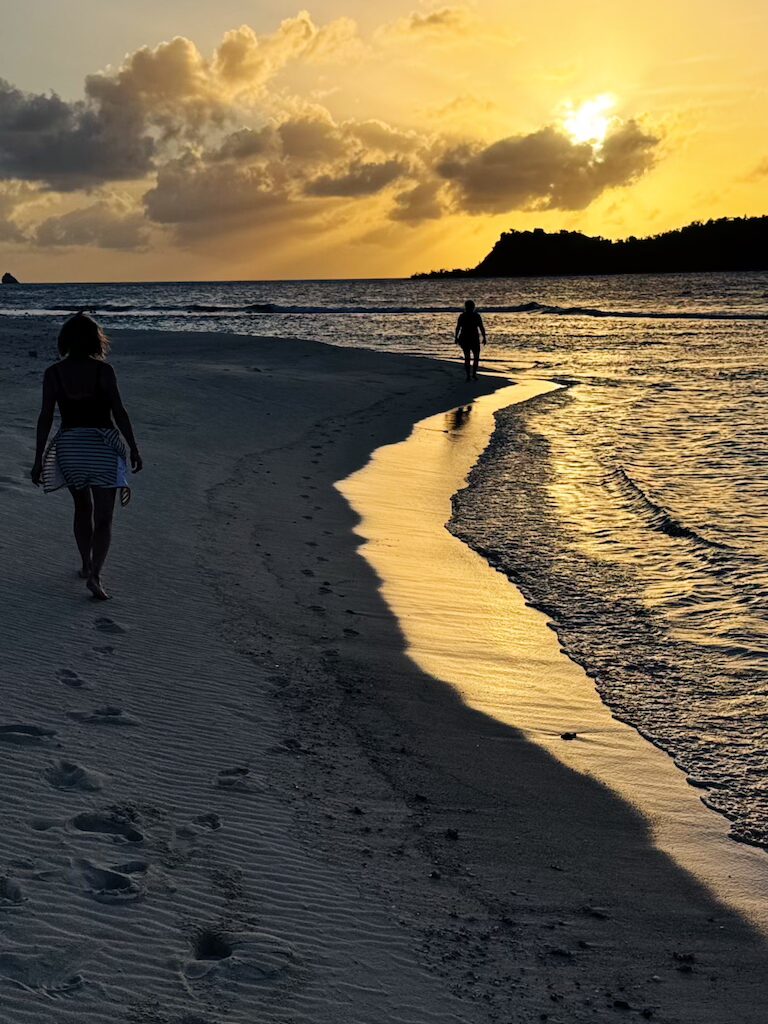
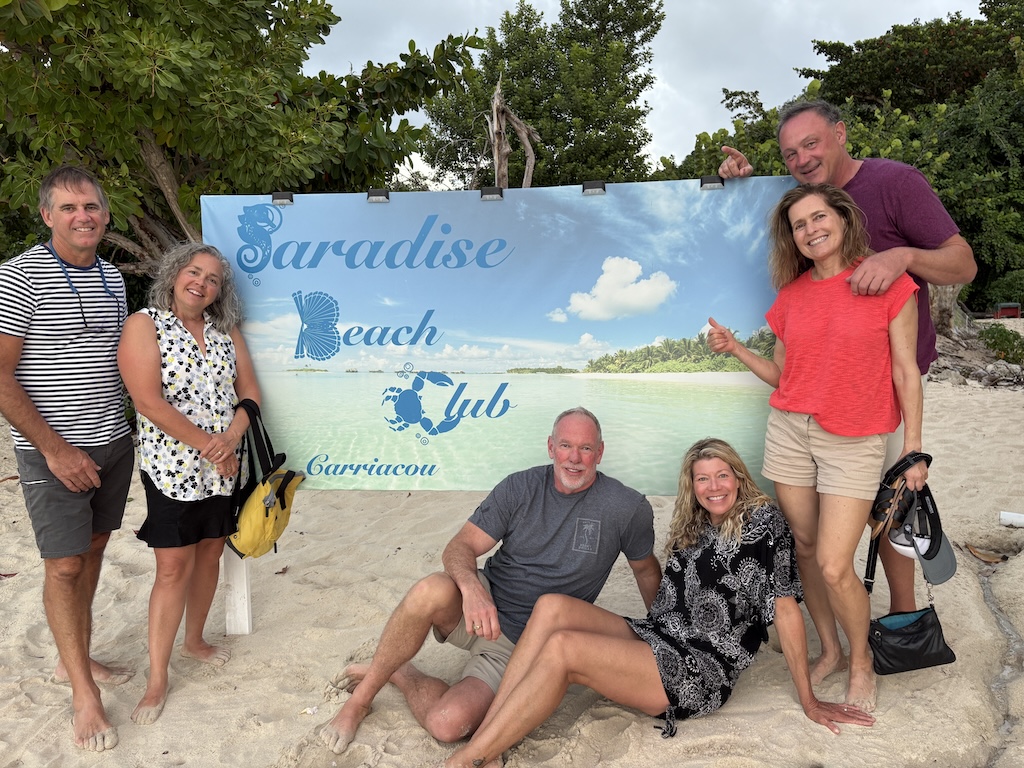
With the onset of more visiting boats, the dining options have correspondingly risen as well, and you can’t spend too long at this anchorage without a visit from a boat boy gently encouraging you to consider dinner at the Paradise Beach Club. We had heard about how, after Hurricane Beryl made this area Ground Zero back in July of 2024, that locals and visiting sailors had helped them rebuild the restaurant, located just at the high splash point of the beach on the main island. We had to sample this paradise. Swiftly transported by complementary boat service from Sandy Island, you can choose to walk to your table in bare feet, or try something casual like flip flops, but the decor clearly shows an owner’s pride and joy. With the holidays approaching, a Christmas tree and sleigh decorated the entrance, and streamers and stars and twinkly lights criss-crossed the open air veranda from which you could look out upon the splendid sea where, in the distant fading light, you might make out your anchor light reminding you of where you had come, and where you will eventually return, stomach and soul refreshed.
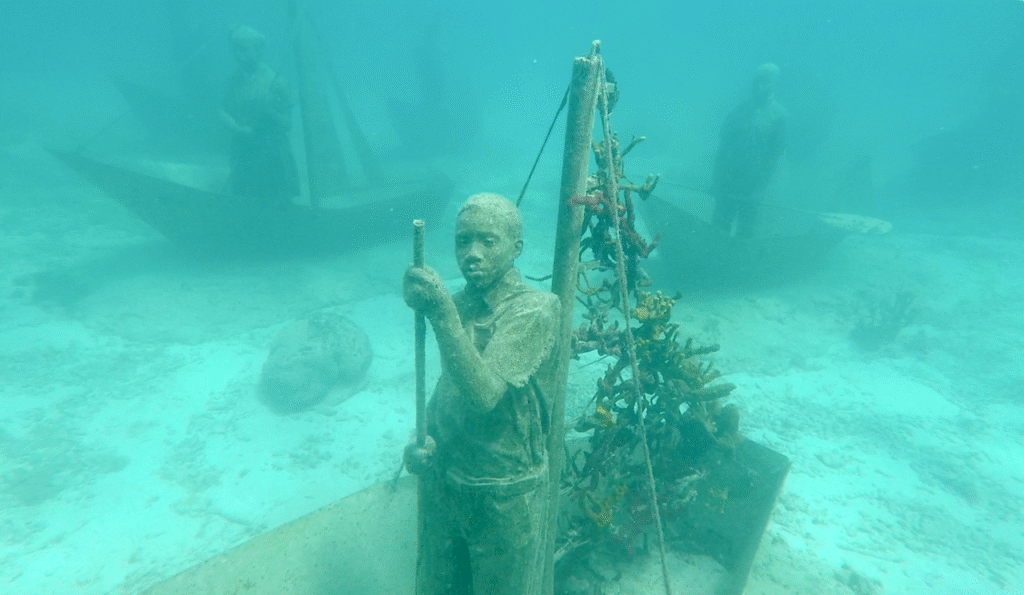
After the success of the first underwater sculpture park, a second one was installed in the little rock outcropping called Jack-a-dan, just north of Sandy Island. A few mooring buoys make it an easy, stress-free stop. But it was odd on the multiple stops we have made that we have been the only boat in attendance. Their loss, our gain, as we snorkeled and dove down to glide by this unique portrayal of men and women in boats modeled after toy paper boats, some with fanciful coral growing out of them. It is a delight to behold, and I truly hope that if maybe enough people read this, there will be more visitors in the future. An artist with this skill deserves to be blogged about in abundance.
Within view a short eight miles to the north was the unevenly tall destination of Union Island. It’s main town, Clifton Harbour, was totally devastated by Hurricane Beryl and only time will tell if it will make it back to it’s pre-hurricane splendor. We recalled years ago our many pleasant strolls through their open air markets and bizarres, and a particularly fun evening at a local restaurant with it’s boisterous steel band members who strategically showed up as soon as we sat down for our meal. The infamous temporary blue tarps covered most of the buildings during our brief visit last year and you wouldn’t be blamed for making parallels with a bombed out Beirut. Clifton is where the Customs office is, and it seems like not many sailors visit for any other reason. There are many residents sleeping in tents, but equally many young people just ‘hanging around’ – the ugly side of vagrancy that can come after a natural disaster. I get it that they have lost their home, and their tourist economy is likewise on life support. But surely many hands can make light work of their predicament, and return rubble to renewal. Or maybe I should be blaming the St Vincent and Grenadines government? Or maybe it’s just the bad luck of Mother Nature’s wrath. I hope someone has the will to lead the recovery.
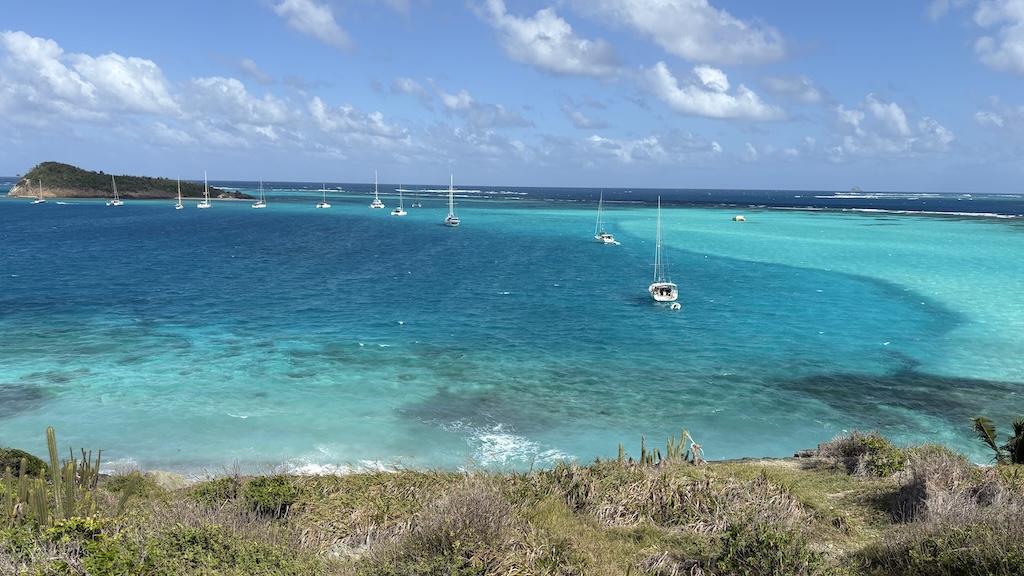
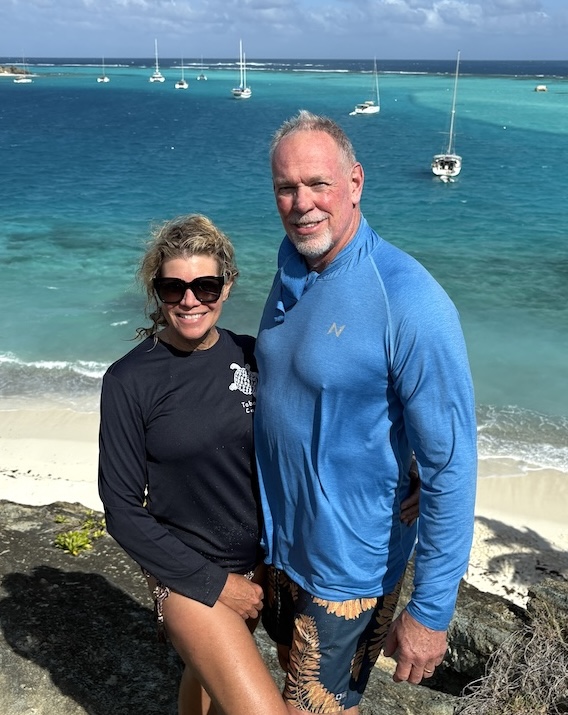
In complete contrast to Clifton Harbour is a second shining example of the Caribbean at it’s finest – the Tobago Cays. This cluster of small islands, open to the strong easterly trade winds but not the ocean swells on account of several horseshoe-shaped reefs laying offshore, is a blessing of nature. A kaleidoscope of colors mark the different water depths, and below the surface a healthy population of turtles provide entertainment to the willing snorkler, particularly in the officially buoyed-off area of the marine park. Boat boys eye you approaching from miles off, and are ready to offer their services, from the usual tying of lines to a mooring buoy, or the more profitable barbecued lobster dinner. I use ‘boat boy’ in it’s colloquial sense, as these are really grown men, some older than us, and this is their livelihood, when they are not ekking out an existence back at Clifton Harbour. Our ‘boy’ introduced himself as Charlie Brown, quick to be followed by his tag line ‘Charlie Brown, Always Around!’ Something in his voice, his easy smile, his gentle mannerism struck a chord with me, perhaps of someone I had previously met. Regardless, we eagerly accepted his offer of tomorrow morning banana bread, followed by an evening of barbecued lobster overlooking these postcard-worthy waters.
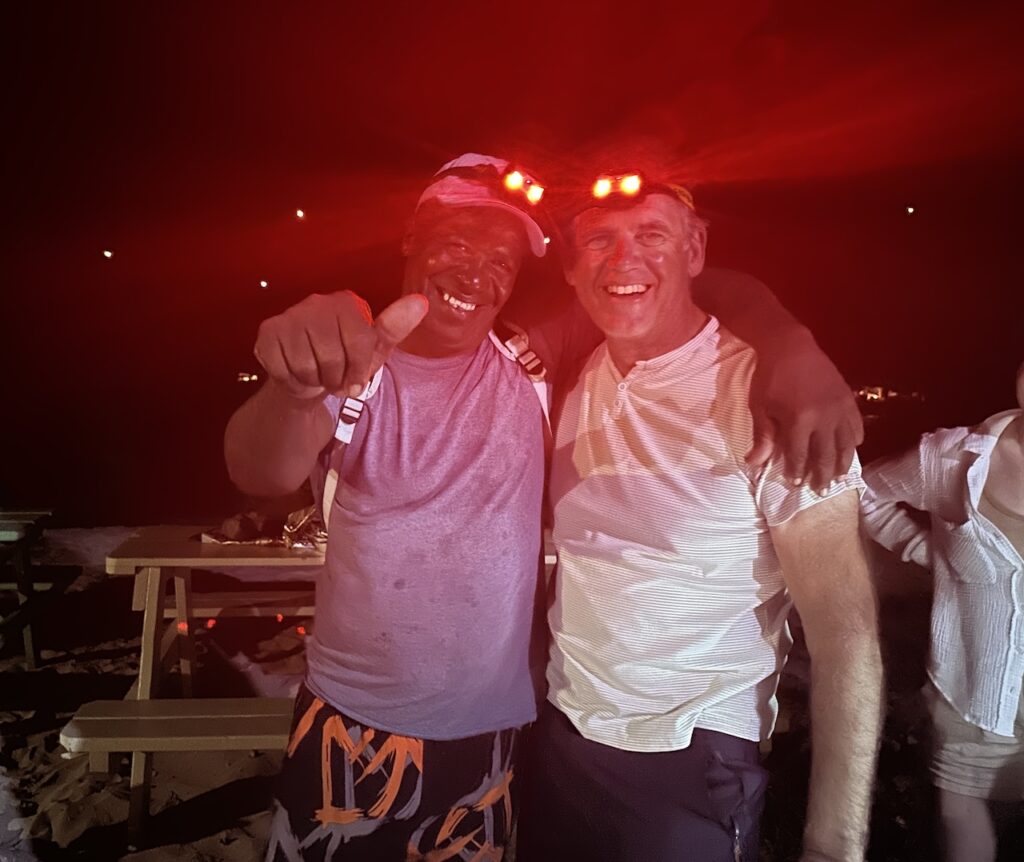
As we wound up our finger licking good lobsters, accompanied by fried plantains, rice and tasty veggies, washed down with traditional rum punch, Charlie Brown came by to check on us. He was wearing a headlamp set to it’s red light, and there was something about that light that made me wonder. Last spring, with our dear friends Ted and Maria, we had stopped here for an overnight and a similar tasty evening of lobster. Our boat boy had shuttled us to the beach on an old open skiff with no lights on it. I gave him my rechargeable headlamp and politely insisted that he use it when he is running back to Clifton in the dark of night, post lobster service. These guys blast through the water in their wooden boats with outboards of ancient vintage, across reef strewn waters, and I shudder to think about the risk of collision when they show no lights, let alone traditional red/green/white navigation lights.
And so, it hit me. Charlie Brown was the same guy that served us last Spring. I pulled out my identical headlamp and showed him, and we shared that simultaneous moment of realization. He shouted out, ‘It was you!’ We shook hands and hugged and shook hands again. Some voices and mannerisms are so unique and distinctive. I knew I had met him before. I was so glad he was doing well, using the headlamp each night, and best of all, surviving the night navigation back home to Clifton.
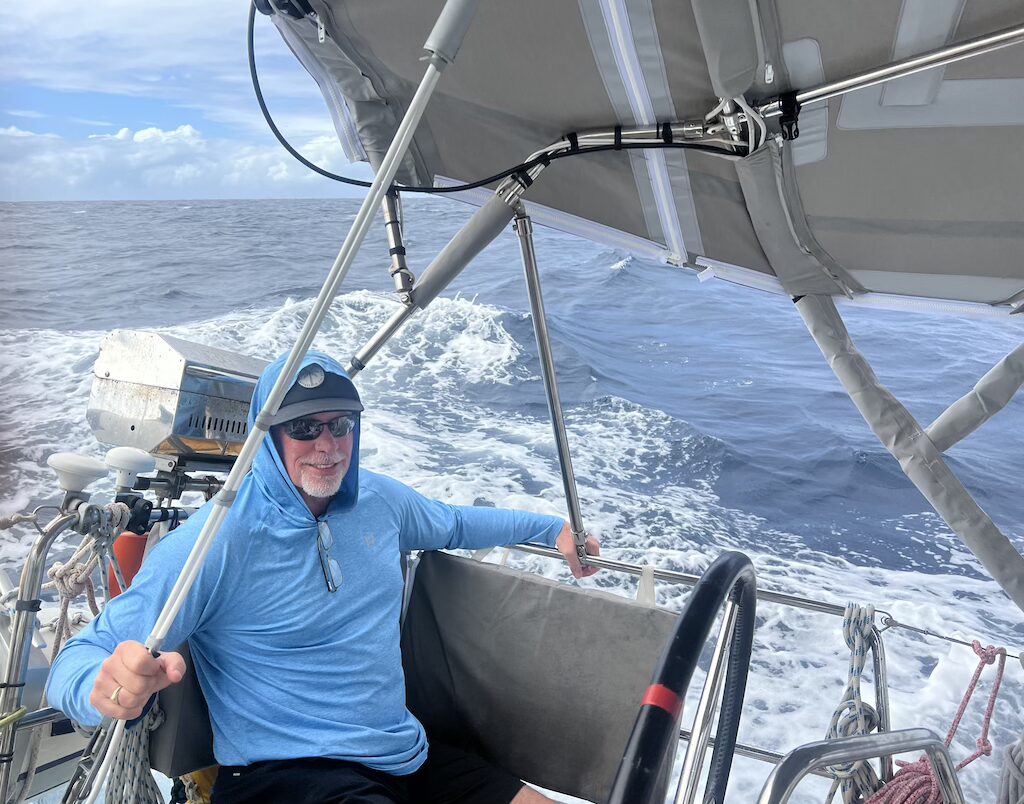
Since leaving southern Grenada, the winds had been blowing a steady 15-20 knots from the East-Northeast. With our course through the Grenadines of slightly East of North, this put us each day on a close-hauled angle to the wind, and put our bow into the waves. The waves are modest when you are on the downwind side of an island, but once you break free of the coast and are between islands, the waves carry the full force and energy of the Atlantic Ocean. We had a 25 mile trek from Tobago Cays to Bequia, our last sailing day with the group and a day nearly fully exposed to the Atlantic swell. Unlike our first day, though, crew members that had felt seasick the first day (who shall go un-named!), had pre-medicated in advance. Everyone had their comfort spot in the cockpit as Sea Rose grabbed a bone in her teeth and drove us upwind to our destination. These early days can be bumpy – sailing gear that had worked before can stop working, our own sailing skills can be rusty, and it can take some time for us to get in the right headspace – but when the stars align, Sea Rose, with her fresh, smooth bottom paint can drive up wind with good speeds.
We arrived in Admiralty Bay, the large anchorage in front of the main town of Bequia, an hour before I had projected. After a few heavy rain squalls, we were settled on our anchor in the company of at least a hundred other boats. Better than that, there was time for everyone to wander ashore through the waterfront boutiques and bars while I pushed our paperwork and passports through Customs. In the morning, the crew would be taking a ferry to the mainland of Saint Vincent to fly home and we would be checking out of the country for points north.
Many years ago, my college buddy Sean Bercaw, whose Dad took their family sailing around the world when he was in grade school and who now makes a career in the maritime industry, would tell me fond stories of sailing into Bequia on tall ships and savoring the charm of it’s nautical history. Walking the streets today gives you a little peek into what the West Indies was like before all of the rest of us showed up on modern boats and high speed catamaran ferries. Despite it’s diminutive size, the mending of sails, the building of biminis, the provisioning of the galley, even the making of ship models to one’s custom design can all be had on the waterfront. When one is done with such nautical pursuits, a walkway along the water’s edge beckons the legs as it bends and twists in front of countless and varied dining options and then over a set of wooden stairs and decking over the water on it’s way to Princess Margaret Bay. Here, if your are agile in deep, sloping sand, you can carry onward with the splash of waves sliding up the beach pitch and smothering your toes. With your agility so tested, one of many older woman sitting in the shade of their understated wooden shacks will sell you ice cold local beer out of their freezer chest for 5EC (about $2). At that rate, you would be excused from losing your balance on the way back into town.
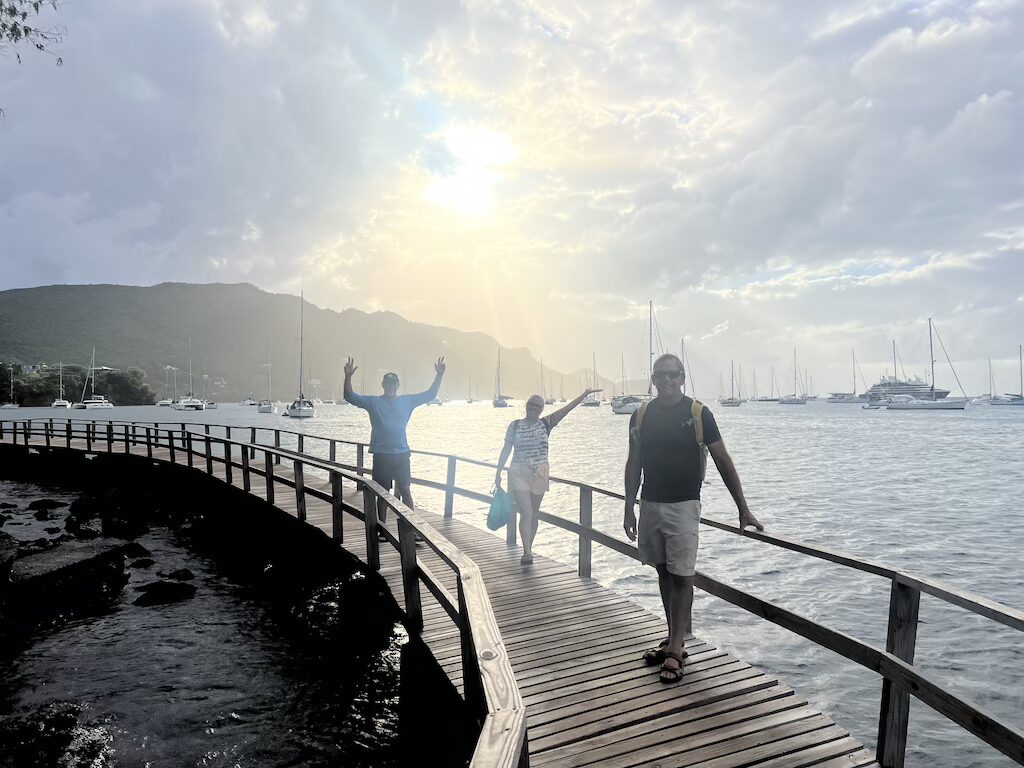
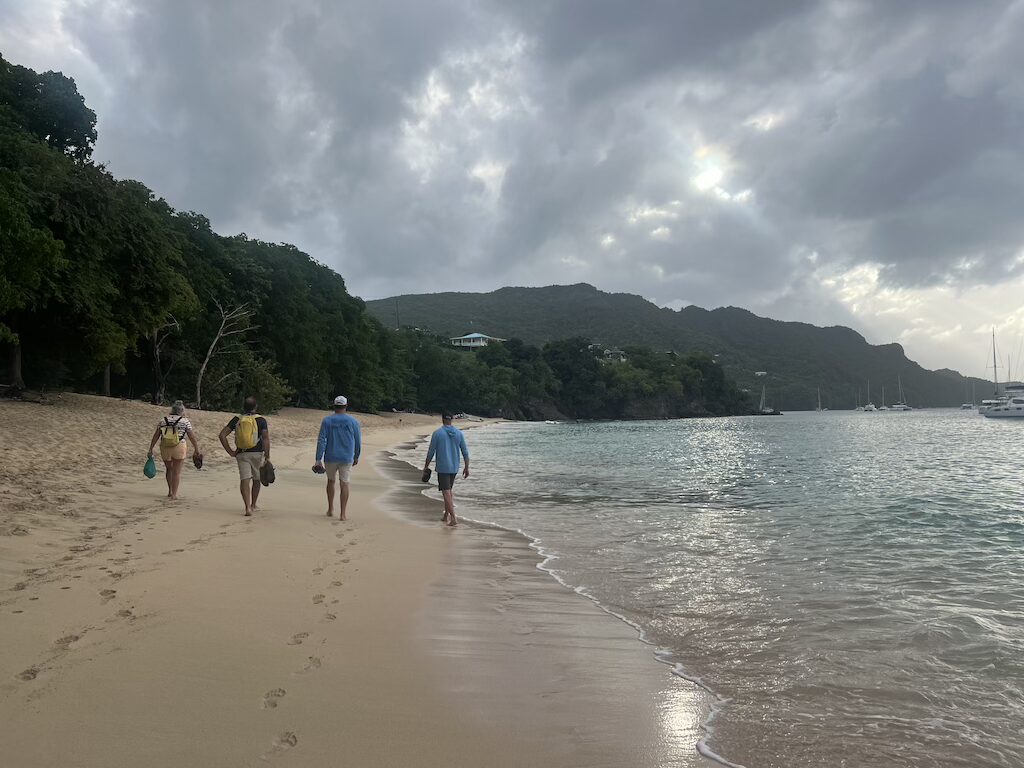
Bequia deftly carries the torch of the past while staying relevant in the present. Like so many other treasures elsewhere in the Caribbean, let’s hope it stays the course.
This was a trip of a lifetime! So grateful to have these shared memories with my favorite people!!
So glad to have you ‘along for the ride’!
Kicking off the Christmas holiday with loved ones in a special place on earth was such a gift! Many thanks to Tom and Karen (K1) for hosting, captaining, and treating us with wonderful food, wine, and adventurous sailing. There are never times I don’t feel comfortable with these two in charge of navigating their yacht. A memorable trip for sure.
Thanks Gary, it was a blast having you all onboard Sea Rose!
Thanks for the wonderful post. So glad you and “The Band” were able to get back together and make what sounds like many musical memories.
Thanks Brad!
What a great way to start December! And. how fun to revisit places you’ve sailed to when the kids where small..
Hope you figure out a good alternative to the solar panels. … wouldn’t the guys who sold you the whole system have know about the issues ahead of time?
Great to hear from you Tony! The solar system was working just the Bimini was not able to take the weight in the end. So we will work on a stern arch to hold several large panels. Take care!
Great read, thanks. Confused by the time frame of your material. Was this Christmas 2024? Your videos are haw far behind real time?
Hello Jim. This blog was in the present time. And yes our YouTube videos are from about a year ago. Cheers!
Thanks Tom- always enjoy all of the content of life4.0
I love hearing about your adventures, Tom!
Thanks Patty, it has been fun getting back into the writing! Take care.